

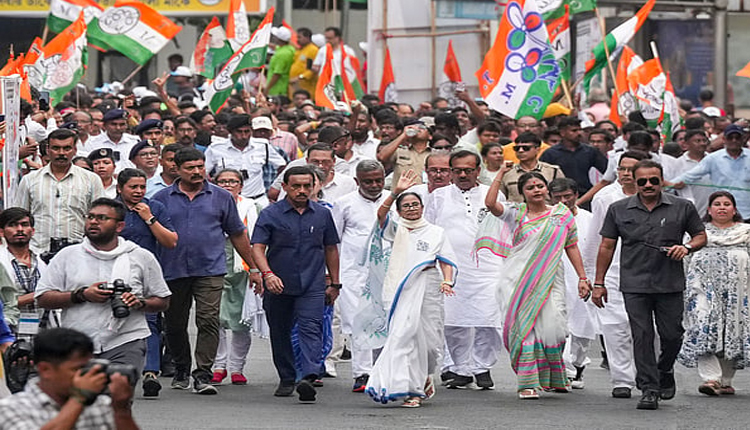
Since the election bugle sounded on March 15, Bengal has witnessed an intense political showdown. Prime Minister Narendra Modi spearheaded the BJP’s charge with 21 mega rallies and three roadshows, while Union Home Minister Amit Shah conducted 20 public meetings and 11 roadshows. Not to be outdone, Chief Minister Mamata Banerjee established direct voter contact through over 30 rallies, bolstered by TMC leader Abhishek Banerjee’s 50-plus public meetings and foot marches.
This election uniquely blended aggressive campaigning with cultural and religious optics. PM Modi and Amit Shah made highly publicised visits to revered sites like the Dakshineswar Kali Temple, Belur Math, and ISKCON, signalling a strong spiritual connect. Conversely, Mamata Banerjee amplified her cultural roots through Chandi Path and local temple visits.
The campaign’s most striking contrast emerged in its symbolic messaging — dubbed the “Jhalmuri vs Vegetable Basket” contest. PM Modi was seen stopping at a local shop in Jhargram to eat Jhalmuri (a popular puffed rice snack), personally paying for it to project a man-of-the-masses image. In stark contrast, Mamata Banerjee was spotted buying vegetables in a local market, directly engaging with vendors to highlight the pressing issue of inflation under the central government.
As the dust settles on the thousands of rallies, street-corner meetings, and fiery rhetoric about regional pride versus “syndicate raj,” the ultimate decision now rests with the voters. On May 4, Bengal will reveal whether BJP’s Parivartan (change) narrative triumphs, or if Mamata Banerjee’s Nijer Meye (our own daughter) campaign successfully retains the state’s helm.

Comments are closed.