

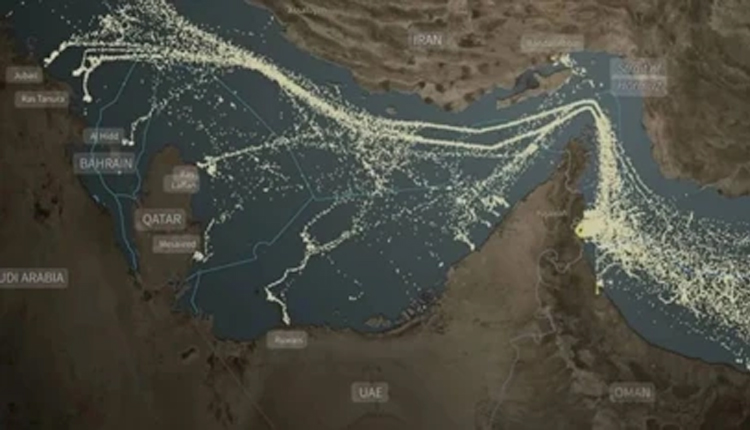
Tehran has closed the crucial Strait of Hormuz only days after the United States and Iran agreed to a two-week ceasefire.

This move has raised new worries about global energy supplies and the stability of the fragile truce.
Iranian state media report that all oil tanker traffic through the narrow waterway has stopped. Ships trying to pass have been sent back to the Persian Gulf.
This happened even though the ceasefire deal was supposed to reopen the strait for shipping.
The move follows intensified Israeli strikes on Lebanon, where at least 254 people have reportedly died. Iran says it closed the strait for security reasons and because of possible naval mines, and has issued new routes for ships.
According to shipping analytics firm Kpler, more than 1,000 vessels, including 187 oil tankers, are now stranded in the area, where normal transit can take over two weeks, a third of the world’s seaborne oil trade. Any prolonged disruption could send international crude prices soaring, affecting economies far beyond the Middle East, including India, which relies heavily on imported oil.
Earlier, two vessels – the Greek-owned bulk carrier NJ Earth and the Liberian-flagged Daytona Beach – had successfully transited the strait shortly. Earlier, two ships, the Greek-owned NJ Earth and the Liberian-flagged Daytona Beach, passed through the strait soon after the ceasefire, which briefly raised hopes that things would return to normal. But those hopes faded as tensions rose again due to ongoing Israeli actions against Hezbollah in Lebanon. It underscores how precarious the US-Iran truce remains, even as diplomatic talks are expected to take place in Pakistan.
With global oil markets unsettled and more than a thousand ships affected, this latest event shows how regional conflicts can impact energy security around the world. Analysts warn that if the closure continues, it could cause wider economic problems, while diplomats work urgently to keep the ceasefire from falling apart.
Comments are closed.