

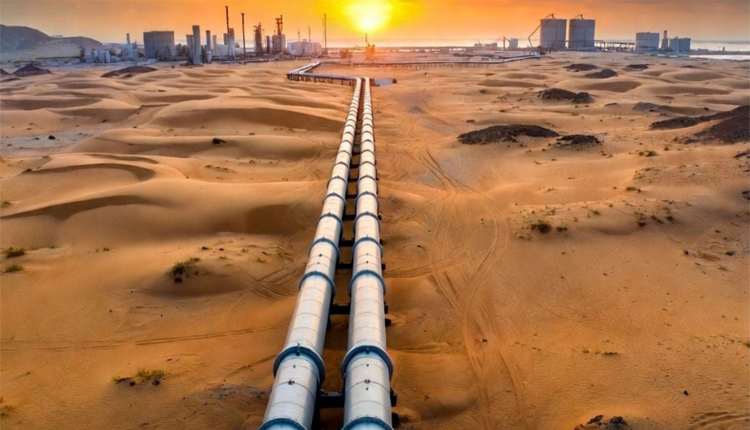
New Delhi: The United Arab Emirates has completed 50 percent work on its new oil pipeline project designed to bypass the Strait of Hormuz, a move that could significantly strengthen the country’s energy security at a time of rising tension around Iran and global oil supply routes.

The announcement was made by ADNOC chief executive Sultan Al Jaber, who said the project is being pushed forward with urgency and is expected to become operational by 2027. The pipeline will help the UAE move more crude towards Fujairah, its strategic port on the Gulf of Oman, without depending fully on the narrow and sensitive Hormuz route.
The Strait of Hormuz is one of the world’s most critical energy chokepoints. A large share of global oil and gas shipments passes through this narrow waterway between Iran and Oman. Any disruption in the strait can immediately affect crude prices, shipping insurance, fuel inflation and energy security across importing countries, including India.
The UAE’s new project is part of its larger West East Pipeline expansion plan. Once completed, it is expected to double the country’s export capacity through Fujairah, giving Abu Dhabi a stronger alternative route for crude oil shipments. Fujairah is important because it sits outside the Strait of Hormuz and opens directly into the Gulf of Oman, allowing tankers to avoid the most vulnerable part of the Gulf shipping lane.
The timing of the project is significant. The Gulf region has been under pressure because of continuing tensions involving Iran, Israel and the United States. Concerns over tanker movement, missile threats and possible restrictions in Hormuz have forced energy producing nations to look for safer export corridors.
According to reports, the UAE is accelerating the pipeline to meet global demand and reduce risk to its crude exports. The Abu Dhabi Media Office had earlier said the project is expected to be ready by 2027. Energy analysts believe such infrastructure can protect the UAE from sudden shocks and give international buyers more confidence during regional crises.
Fujairah has already become one of the most important energy hubs in the Middle East. It handles crude exports, oil storage and ship refuelling, and its importance has grown whenever the Strait of Hormuz faces disruption. The existing Habshan Fujairah pipeline has already allowed the UAE to export oil without sending every barrel through Hormuz, but the new expansion will increase that capacity further.
For India, Japan, China and other Asian buyers, the project is worth watching closely. Any stable route outside Hormuz can reduce panic in energy markets during conflict. India imports a large part of its crude from West Asia, so alternative export routes from Gulf suppliers can help soften the impact of regional instability.
However, the pipeline will not remove the importance of Hormuz completely. The strait will remain vital for Qatar’s LNG exports, Saudi shipments, Iraqi oil and other Gulf energy flows. But for the UAE, the Fujairah route offers a strategic cushion.
The message from Abu Dhabi is clear. In a region where geopolitics can change overnight, oil producers are no longer relying only on traditional sea lanes. The UAE’s pipeline push is not just an infrastructure story. It is a calculated move to protect exports, reassure markets and reduce vulnerability in one of the world’s most sensitive energy corridors.
Comments are closed.