

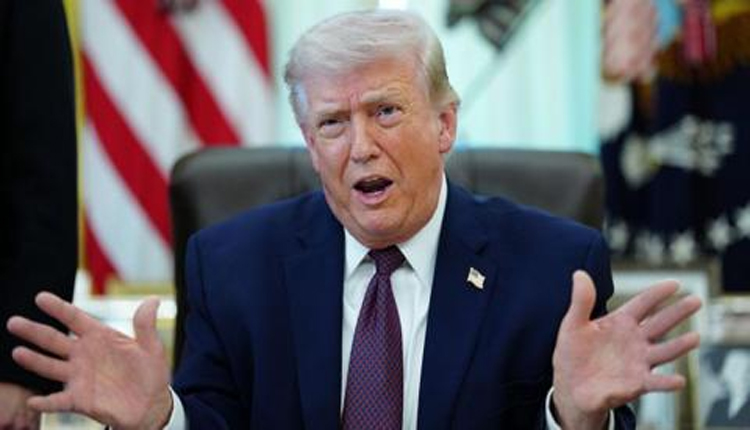
Washington DC: Amidst escalating tensions and recent missile exchanges in the Middle East, former U.S. President Donald Trump has issued a stern warning regarding the Strait of Hormuz, a critical maritime chokepoint for global oil supplies. Trump asserted that the United States remains the ultimate “guardian” of the waterway and suggested that the world must prepare for a scenario where the passage remains open even without the cooperation or presence of Iran.

The statement comes at a volatile time as the international community closely monitors the conflict between Iran and Israel. The Strait of Hormuz, situated between Oman and Iran, serves as the transit point for nearly one-fifth of the world’s total oil consumption. Any disruption to this narrow corridor typically sends shockwaves through global energy markets, leading to immediate spikes in crude oil prices.
Speaking on the strategic importance of the region, Trump emphasized that the U.S. military presence serves as a stabilizing force that prevents regional actors from weaponizing global trade routes. He stated that the “Hormuz is open and will remain open,” dismissing threats that Tehran could effectively shut down the strait in response to military pressure or economic sanctions.
The former President further suggested a controversial policy shift, proposing a 20 percent toll on all commercial vessels and oil tankers passing through the strait. He argued that since the U.S. provides the security and “guardianship” necessary for safe passage, the international community and private shipping firms should contribute to the costs of that protection.
Trump’s rhetoric reflects a “peace through strength” approach, aiming to reassure global markets that the flow of energy will not be held hostage by regional conflicts. However, analysts point out that such statements also heighten the diplomatic stakes. By positioning the U.S. as the sole arbiter of the strait’s accessibility, the narrative challenges the traditional maritime rights claimed by littoral states.
For major oil-importing nations, including India, any talk of tolls or increased military patrolling in the Persian Gulf is a double-edged sword. While it ensures a steady supply of crude, it also introduces new logistical costs and geopolitical complexities that could impact domestic fuel prices and long-term energy contracts.
As the situation evolves, the global focus remains on whether these statements will translate into a change in American naval posture. For now, the “guardian” narrative serves as a potent diplomatic tool, signaling to Tehran that any attempt to block the strait would meet with significant American resistance. The balance between maintaining free trade and avoiding a full-scale maritime conflict remains the most delicate challenge for policymakers in Washington and beyond.
Comments are closed.