

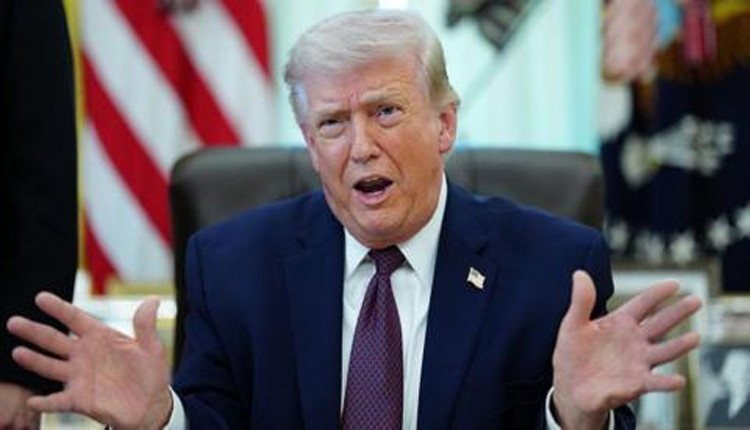
Washington: The United States administration under President Donald Trump has proposed a sweeping new round of import tariffs targeting several key global trading partners, including India, China, the European Union, and key Asian economies. Under the fresh proposals, Indian exports could face duties of up to 25 per cent, while Chinese shipments face steep levies of up to 40 per cent.

According to notifications and reports citing the Office of the United States Trade Representative (USTR), the proposed measures form part of ongoing federal investigations aimed at curbing foreign industrial overcapacity and protecting domestic manufacturing. The tariff structure outlines duties of up to 25 per cent for imports arriving from India, Cambodia, Indonesia, South Korea, Malaysia, Taiwan, and Thailand.
Under the same regulatory framework, goods from the European Union, Bangladesh, Japan, Switzerland, and Singapore face proposed duties of up to 20 per cent, whilst Vietnamese imports are earmarked for tariffs reaching 35 per cent. The USTR indicated that for certain developing partners—such as Bangladesh, Cambodia, Indonesia, and Malaysia—the final tariff burden could remain capped at 18 per cent. Separately, proposed tariff modifications concerning imports from Brazil are scheduled for a formal public hearing on 14 January 2027.
The announcement comes at a delicate juncture for Indo-US economic ties. Bilateral engagement had experienced friction following earlier tariff announcements by Washington, leading to a temporary slowdown in trade negotiations before talks resumed. More recently, External Affairs Minister S Jaishankar observed that discussions with the American administration were advancing constructively, expressing optimism that the two nations could conclude a bilateral trade agreement soon.
Trade analysts observe that while the USTR’s proposals reflect Washington’s persistent stance on trade imbalances, the draft duties will undergo a period of stakeholder review and public feedback before implementation. For Indian exporters across sectors such as engineering goods, textiles, and chemicals, the development introduces renewed uncertainty, even as New Delhi continues diplomatic and trade channel dialogues with Washington to secure stable market access.