

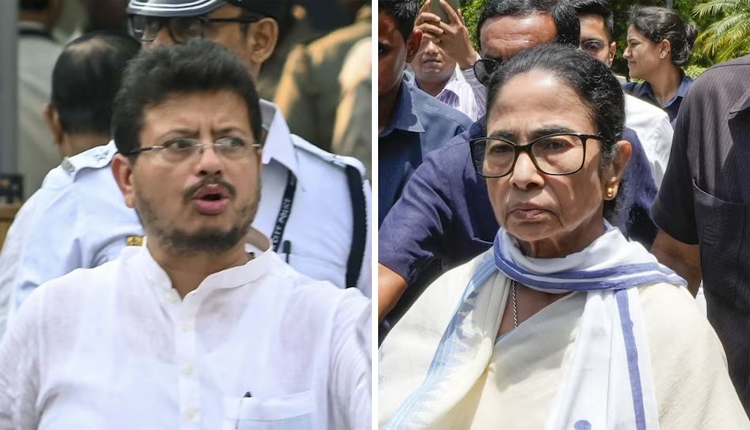
Kolkata: In an unprecedented development that has fundamentally shaken the political landscape of West Bengal, the Trinamool Congress (TMC) has plunged into a major organizational crisis following a vertical split engineered by rebel leader Ritabrata Banerjee. Striking a dramatic blow to the established leadership, the rebel faction on Sunday announced the removal of party founder Mamata Banerjee from her long-held position as the national chairperson. The dissident group has also formally suspended the party’s national general secretary and second-in-command, Abhishek Banerjee, for what they termed anti-party activities.

The dramatic escalation unfolded during a high-stakes meeting convened by the rebel camp at a prominent hotel in New Town, Kolkata. The convention saw the participation of nearly sixty MLAs and seventy councillors from the Kolkata Municipal Corporation, reflecting substantial legislative and municipal backing for the splinter group. During the session, the rebel camp declared their formation as the “real Trinamool” and selected senior leader and Howrah Madhya MLA Arup Roy as the new chairperson of the party. To solidify their parallel organizational structure, the dissidents appointed senior leaders Aroop Biswas, Firhad Hakim, Rathin Ghosh, and Sabina Yasmin as vice-chairpersons.
The roots of the current rebellion stem from structural discontent following the party’s recent electoral performance and the centralization of authority under Abhishek Banerjee. Addressing the gathering, Ritabrata Banerjee stated that the party’s constitution mandates the reconstitution of a national working committee every three years. He argued that since the last committee was formed in February 2022, the organizational structure had expired without renewal, necessitating immediate intervention to establish a legitimate national leadership. The crisis escalated quickly after former party treasurer Aroop Biswas moved to freeze a key Trinamool Congress bank account containing approximately 675 crore rupees, crippling the official faction’s immediate financial leverage.
For the ordinary citizens of West Bengal, this bitter factional warfare within the dominant regional entity signals an era of severe political instability. With elected representatives and municipal councillors actively occupied in protecting their positions, engineering parallel committees, or managing legal technicalities, core governance and welfare delivery across the state face immediate administrative delays.
The official faction led by Mamata Banerjee has strongly countered the development, questioning the constitutional validity of the rebel meeting and characterizing the entire exercise as an act of betrayal during a challenging period for the organization. The party has approached legal experts to contest the rebel faction’s claims. However, with the dissident camp successfully demonstrating a significant chunk of legislative numbers, the battle for the control, legacy, and assets of the Trinamool Congress is now headed for a prolonged administrative and judicial showdown.
Comments are closed.