

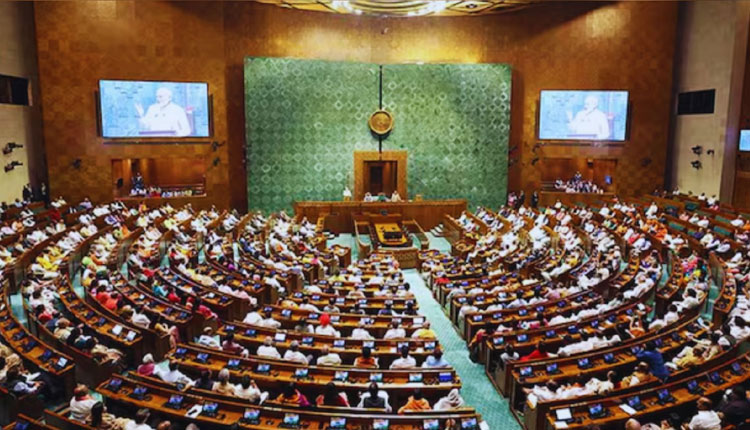
New Delhi: The Winter Session of Parliament is expected to commence in the first week of December, with the government preparing to introduce a crucial delimitation-linked Constitution amendment bill. According to reports from news agency PTI, this proposed legislation will be the top priority for the ruling National Democratic Alliance (NDA) as it seeks to pave the way for a 33 per cent reservation for women in the Lok Sabha and state assemblies ahead of the 2029 general elections.

The upcoming bill aims to expand the overall strength of the Lok Sabha from its current 543 seats to a maximum of 850 seats through a fresh delimitation exercise. However, the government faces a tough numbers game. Passing a Constitution amendment bill requires a two-thirds majority in the Lok Sabha, which translates to 361 votes in a full 543-member House. Given that the current strength is 540 due to three vacancies, the NDA, which has 320 members, falls short. The ruling alliance will need cross-voting or the backing of Opposition parties to cross the required threshold, though a senior government functionary recently expressed confidence that the bill would pass with a comfortable margin of 15 to 18 votes.
Adding to the complexity are the escalating tensions between the government and the Opposition. The upcoming session is anticipated to be stormy, as the Opposition bloc has ramped up its protests over the Special Intensive Revision (SIR) of electoral rolls and has demanded the resignation of Chief Election Commissioner Gyanesh Kumar. Political observers note that these ongoing agitations could spill over into Parliament, potentially disrupting proceedings and complicating the debate on the quota bill.
Furthermore, to address the long-standing concerns of southern states regarding their political representation post-delimitation, the government is reportedly exploring a new framework. The proposed formula would increase Lok Sabha seats by 50 per cent uniformly across all states while maintaining their existing inter-state share based on the 1971 Census.
Interestingly, the previous Monsoon Session of Parliament, which was adjourned sine die on August 13, remained unprorogued for a record 94 days. By keeping the session technically alive, the government retained the flexibility to convene an extended sitting at a short notice of two days, compared to the 14 days required for calling a fresh session. As the political temperature continues to rise, all eyes are now on the official dates for the December sitting.