

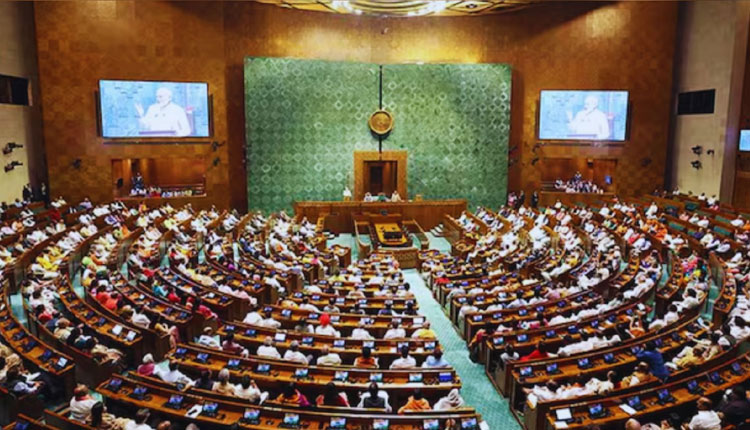
New Delhi: When the seventeenth Lok Sabha concluded its term, parliamentary records revealed a striking figure: the House of the People met for an annual average of merely 55 days between 2019 and 2024. The statistic has reignited an urgent debate over legislative accountability, policy deliberation, and the changing character of parliamentary democracy in India.

Historical trends point to a steady and steep decline. According to studies on parliamentary proceedings, the first Lok Sabha (1952–1957) sat for an annual average of 135 days. The second and third Houses maintained robust schedules, averaging 116 and 117 days respectively. By the tenth Lok Sabha in the 1990s, that figure had slipped to 93 days, and since the 1980s, annual sittings have consistently stayed below the 100-day threshold. The situation in state legislative assemblies is even sparser, with assemblies meeting for an average of just 26 days annually; the Uttar Pradesh assembly, which met for 83 days a year in the 1950s, dropped to around 24 days in recent years.
Contrary to popular belief, this is not an explicit violation of constitutional provisions. The Constitution mandates under Article 85 only that the gap between two sessions must not exceed six months, leaving the total number of working days unprescribed. While the 2002 National Commission to Review the Working of the Constitution recommended a statutory minimum of 90 days for major legislative houses and 50 days for smaller assemblies, and private members’ bills have occasionally sought a 100-day mandate, no binding legislation has ever been enacted.
In an editorial analysis for TV9, senior journalist Santosh Nair observes that this decline represents a dual reality rather than outright inactivity. Defending voices point out that lawmakers conduct extensive governance outside the televised chamber: parliamentary standing committees dissect legislative drafts away from the cameras, ministries formulate policies, and Members of Parliament dedicate significant time to their local constituencies.
However, legislative analysts emphasize that committee rooms cannot substitute for the parliamentary floor. It remains the singular national platform where ministers must directly answer unscripted questions and where opposition parties register public dissent. As Nair noted, the 55-day count is less an accusation than a vital yardstick: it measures how much of representative governance remains open to public scrutiny, and how much the citizenry must inevitably leave to trust.