

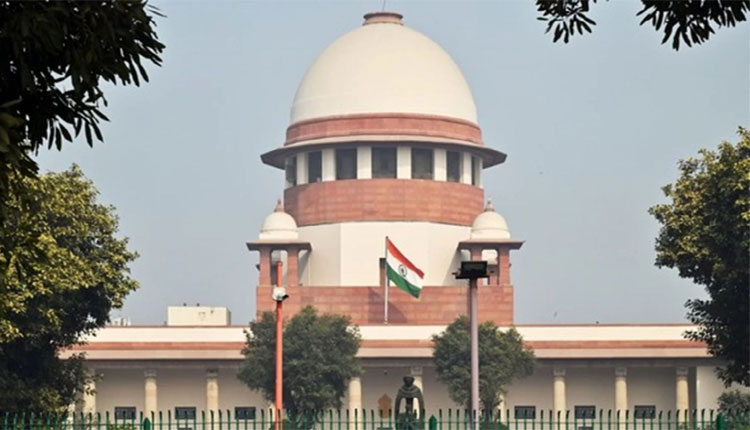
New Delhi: Expressing profound shock over the exorbitant pricing of life-saving drugs, the Supreme Court of India on Tuesday strongly condemned the massive disparity between the manufacturing cost and the Maximum Retail Price (MRP) of essential cancer medicines. The top court termed the practice of fixing astronomical MRPs as “extortion” and “broad daylight dacoity,” demanding accountability from regulatory authorities who have seemingly turned a blind eye to the issue.

During the hearing of petitions seeking stricter regulation of medicine prices, Justice Sandeep Mehta flagged a glaring anomaly in the pharmaceutical supply chain. “There are medicines, essential medicines for cancer, which the MRP is 27,000 and the PTR (Price To Retailer) is 2700. That’s absolute rampage, carnage… absolute dacoity, broad daylight dacoity,” Justice Mehta remarked.
The bench questioned why drug manufacturers are legally permitted to set an MRP that is a staggering ten times higher than the price at which they sell the product to retailers. Highlighting the severe financial toll this takes on desperate families, Justice Mehta observed, “If that is not extortion, what else it is? People sell their houses, people sell their ornaments for getting the medicines.”
The court also severely criticized the regulatory bodies tasked with monitoring drug prices, expressing surprise over their inaction. “It is very surprising that the authorities who are supposed to take the decision on this are absolutely silent,” the bench noted.
The proceedings shed light on the deeper systemic issues affecting poor patients, particularly in corporate hospitals. It was pointed out during the hearing that while traditional chemists might occasionally offer discounts by forgoing a portion of their margin, corporate healthcare facilities frequently force patients to purchase drugs exclusively from their in-house pharmacies at the full, hyper-inflated MRP. This leaves vulnerable patients with no practical choice or bargaining power during critical treatments.
Furthermore, the bench noted that this inflated pricing model ultimately drains public funds as well, since government-sponsored health schemes end up reimbursing these artificially high costs.
Responding to the court’s strict observations, Senior Advocate Kapil Sibal, representing the Indian Pharmaceutical Alliance, argued that manufacturers were not selling the drugs at high prices and shifted the blame to retailers for pocketing massive profit margins. However, Justice Mehta immediately countered this argument, firmly pointing out that it is ultimately the manufacturers who fix the initial MRP, thereby creating the room for such exploitative retail margins.
Comments are closed.