

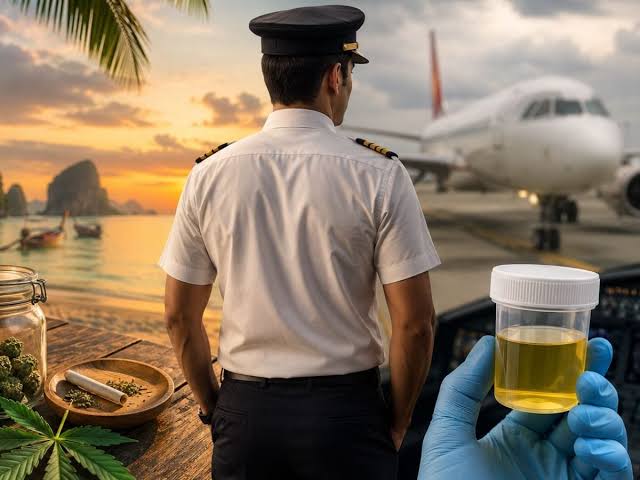
New Delhi: A terrifying mid air plunge involving an Air India Airbus A320 flying from Phuket to New Delhi has brought strict attention to the drug testing protocols for aviation personnel in the country. The alarming incident occurred on August 4 when flight AI 2379 suddenly lost nearly 300 feet of altitude. Following standard safety procedures, both pilots underwent post flight screenings, and the pilot in command surprisingly tested positive for marijuana during a confirmatory dope test.

Taking immediate and unprecedented action, the Air India Group has announced mandatory drug screening for its entire roster of nearly 5000 pilots, which includes the crew of Air India Express. Starting August 13, this massive one time testing exercise goes significantly beyond the current regulatory requirements. The airline management stated that this internal measure aims to guarantee absolute compliance with aviation standards and reassure public confidence in their safety protocols.
Currently, the Directorate General of Civil Aviation enforces strict regulations regarding alcohol and substance consumption. While breath analyser tests for alcohol are strictly conducted before and after every single flight, the testing for psychoactive substances operates differently. Under the Civil Aviation Requirements effective since early 2022, scheduled airlines must randomly conduct urine tests on at least ten percent of their safety sensitive employees annually. These include flight crew members and air traffic controllers. Mandatory testing is also triggered following major safety incidents or accidents.
The regulatory framework is designed to detect six categories of psychoactive substances, including cannabis, cocaine, and opiates. The rules dictate that if a rapid screening result turns out non negative, the employee is immediately grounded until a high complexity laboratory confirms the findings.
The aviation regulator maintains a stringent three strike policy for confirmed violations. A first time positive result mandates the pilot to undergo professional de addiction and rehabilitation before returning to active duty. If a pilot is caught for the second time, their flying license is suspended for a strict period of three years. A third violation leads to the permanent cancellation of their commercial flying license.
Prompted by the recent Phuket Delhi flight scare, the central government is now reportedly considering amendments to tighten the existing drug testing framework. Discussions are underway to potentially increase the minimum random testing percentage and introduce harsher penalties, ensuring that passenger safety remains completely uncompromised in Indian skies.
Comments are closed.