

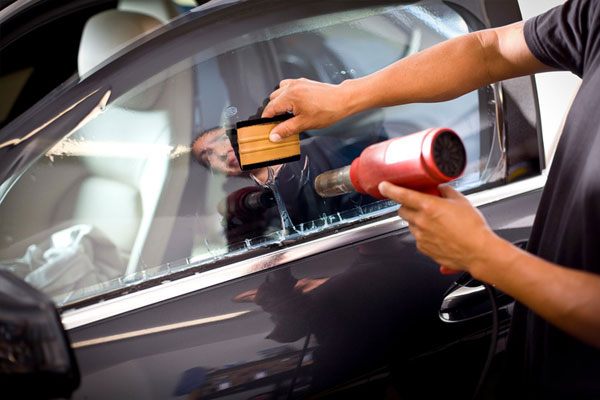
New Delhi: While many vehicle owners across India install aftermarket dark tint or sun-control films to lower cabin temperatures and achieve a sporty look, traffic authorities have stepped up enforcement, warning that pasting any external film on vehicle windows remains a punishable offence under the Motor Vehicles Act.

The legal framework stems from a landmark 2012 Supreme Court ruling that imposed a complete ban on pasting any form of aftermarket plastic film, solar film, or dark sheets onto car window glass. Under Central Motor Vehicle Rules, visual transparency standards dictate a minimum of 70% Visual Light Transmission (VLT) for front and rear windscreens and at least 50% VLT for side windows.
Crucially, legal compliance applies solely to factory-fitted tinted glass manufactured directly by automakers. Even if a vehicle owner applies an aftermarket film that claims to permit 50% or 70% light transmission, the vehicle is still considered in violation of traffic regulations.
Authorities have strictly enforced the prohibition primarily due to crime prevention and public safety. Excessively darkened glass impairs exterior visibility, hindering law enforcement from detecting illicit activities, monitoring passenger safety, or verifying seatbelt compliance. Darkened films also degrade driver visibility during nighttime driving, heavy rainfall, or dense fog, heightening the risk of road accidents.
Motorists caught operating vehicles with unauthorised window films face fines ranging from ₹500 to ₹2,000 depending on the state and jurisdiction. Traffic personnel are also empowered to strip off the sun film on the spot at the owner’s expense. Repeated violations can result in vehicle impoundment or the temporary suspension of the vehicle’s Registration Certificate (RC).
Traffic experts also note that magnetic mesh sunshades, zip-on cutouts, and window curtains—often used to circumvent the film ban—are legally permissible only when the vehicle is parked. Deploying them while driving is treated as an obstruction of driver visibility and a breach of the 50% VLT rule for side glass, making the driver liable for a traffic challan.
Comments are closed.