

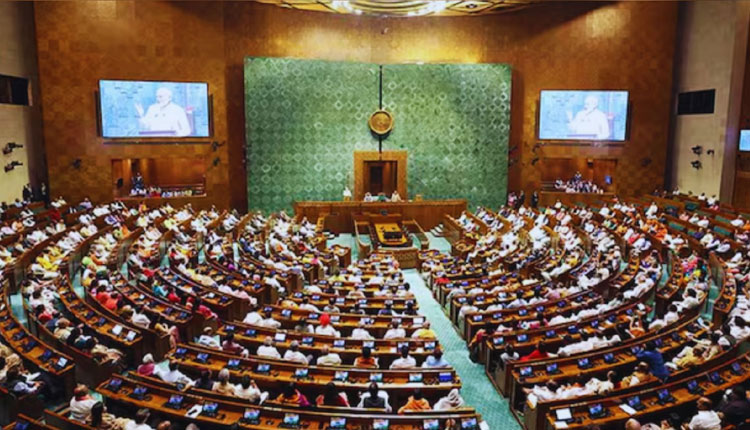
New Delhi: The Union government has decided to reconvene a four-day sitting of Parliament starting this weekend, structuring the assembly as an extension of the previously adjourned Monsoon session rather than an entirely fresh Winter session. Parliamentary proceedings will witness a noticeable departure from routine, with authorities confirming that there will be no Question Hour, Zero Hour, or private members’ business conducted during these sittings.

According to parliamentary notifications, the Lok Sabha is scheduled to reconvene on November 30, while the Rajya Sabha will meet from December 2. Depending on the exigencies of official business, proceedings in both Houses are slated to conclude on December 3.
Announcing the move on social media platform X, Parliamentary Affairs Minister Kiren Rijiju stated that the government had requested the Lok Sabha Speaker and the Rajya Sabha Chairman to reconvene the sittings of the respective Houses. Within hours of the formal proposal, both secretariats issued communiqués notifying members of the revised schedule. The communications clarified that the session would solely transact urgent government business, depriving lawmakers of their standard window to question ministers on executive functioning or raise immediate matters of urgent public importance.
The procedural framework behind reconvening the Houses relies on technical parliamentary rules. The Monsoon session of Parliament was adjourned sine die on August 13 without being formally prorogued by President Droupadi Murmu. Under established parliamentary convention and rules of procedure, when a House is merely adjourned sine die rather than prorogued, the presiding officer retains the authority to reconvene sittings upon government request. Formal prorogation will take place only after the conclusion of proceedings on December 3.
The condensed sittings carry significant political and legislative weight. Speculation is rife that the Union government intends to introduce key constitutional amendment bills concerning delimitation and women’s reservation. A similar legislative exercise witnessed roadblocks in April due to the lack of a two-thirds majority required for constitutional amendments. To finalize its strategy and clear legislative amendments, the Union Cabinet chaired by Prime Minister Narendra Modi convened a meeting on Friday afternoon to approve the draft proposals before tabling them in the reconvened House.