

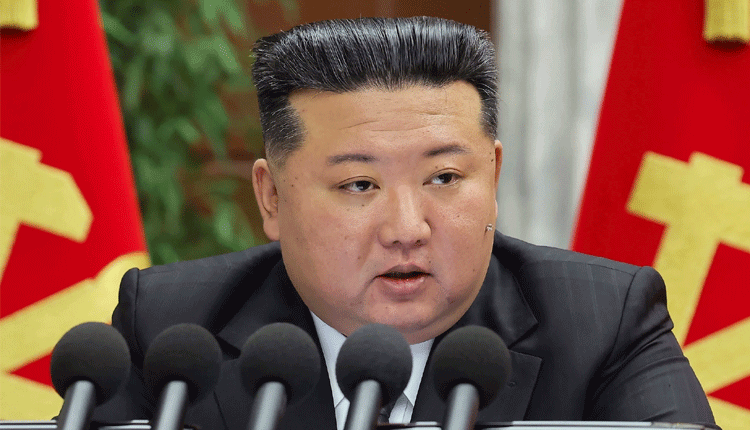
Pyongyang: In a historic legislative move, North Korea has officially amended its national constitution after a 54-year hiatus, introducing sweeping changes to its nuclear protocol and diplomatic stance. Released on Wednesday, the updated constitution significantly consolidates the authority of Supreme Leader Kim Jong Un, whilst drastically redefining Pyongyang’s relationship with its southern neighbour.

A pivotal alteration in the newly drafted constitution focuses on North Korea’s nuclear command structure. The State Affairs Commission, chaired by Kim Jong Un, retains ultimate control over the nation’s nuclear arsenal. However, the legal framework has been modified to ensure the continuity of nuclear deterrence. The new provisions grant Kim the unprecedented authority to designate a successor or command entity capable of authorising a nuclear strike in the event of his assassination.
Geopolitical analysts suggest this aggressive constitutional restructuring is a direct response to recent global conflicts and the fear of decapitation strikes by foreign adversaries. According to the Stockholm International Peace Research Institute, North Korea currently possesses approximately 50 nuclear warheads, with ambitions to expand its stockpile to 90 by the year 2030.
Equally significant is the drastic shift in Pyongyang’s official stance towards South Korea. Breaking away from decades of state ideology that viewed the South as a rebel-held territory awaiting reunification, the new constitution formally recognises the Republic of Korea as a separate, neighbouring state. The Korea JoongAng Daily noted that Article 2 of the amended constitution now identifies China and Russia as neighbours to the north, and the Republic of Korea to the south.
Furthermore, the revised text conspicuously omits language branding South Korea as the “primary enemy,” leading to speculation that this legal adjustment could pave the way for future peace treaty negotiations on the Korean Peninsula.
The constitutional overhaul also includes domestic administrative changes. Amendments to Articles 121 and 156 have further centralized power, transferring complete control of the state cabinet to Kim Jong Un and restructuring the recruitment processes for senior judiciary and law enforcement officials.
The international community, particularly the United States, is closely monitoring these constitutional developments, as the formal legalisation of a post-assassination nuclear strike protocol significantly raises the stakes for diplomacy and regional security.