

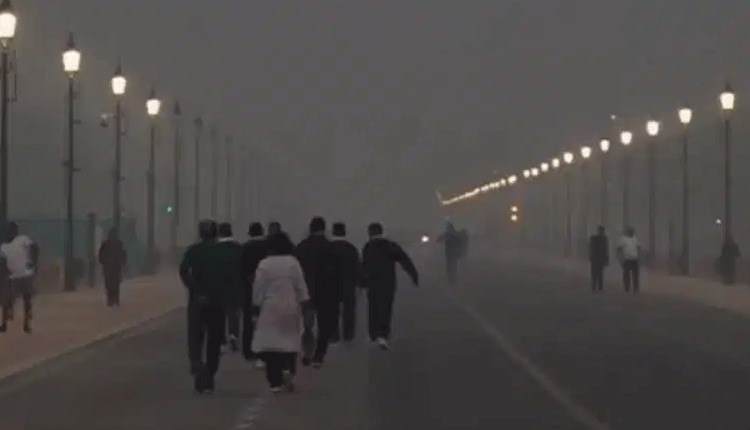
New Delhi: In a major move to combat the alarming spike in air pollution levels across the National Capital Region (NCR), the Commission for Air Quality Management (CAQM) has announced sweeping restrictions, including a ban on construction activities and a mandatory work-from-home policy. The directives will remain in effect from November 5 to November 20.

According to the CAQM order, all dust-generating construction and demolition activities have been halted across Delhi-NCR. This comprehensive ban applies to both private residential projects and public infrastructure works, including the construction of roads, highways, flyovers, power transmission lines, and telecommunication projects.
However, to prevent the disruption of critical public services, the commission has outlined specific exemptions. “Projects related to railways, metro services, airports, inter-state bus terminals, hospitals, water supply, and sanitation are exempt from this ban,” the CAQM directive stated. Activities concerning national security, defence, and projects of national importance will also continue without interruption.
In addition to curbing construction dust, the CAQM has mandated that government and private offices in Delhi and five adjoining districts—Gurugram, Faridabad, Sonipat, Ghaziabad, and Gautam Buddha Nagar (Noida and Greater Noida)—must operate at a maximum of 50 percent staff capacity. The remaining employees have been directed to work from home. Essential services and industrial establishments where remote work is not feasible have been granted an exemption from this rule.
Explaining the rationale behind these stringent measures, the CAQM cited historical air quality data from November 2018 to 2025. The commission noted a recurring pattern where the Air Quality Index (AQI) plummets to the ‘severe’ or ‘severe plus’ categories during early and mid-November.
Authorities pointed out that the dangerous deterioration in air quality is primarily driven by unfavourable meteorological conditions, such as plummeting wind speeds and limited atmospheric mixing, which trap pollutants close to the ground. This toxic smog is further exacerbated by the seasonal burning of agricultural stubble in neighbouring states, creating a hazardous environment for residents across the NCR.