

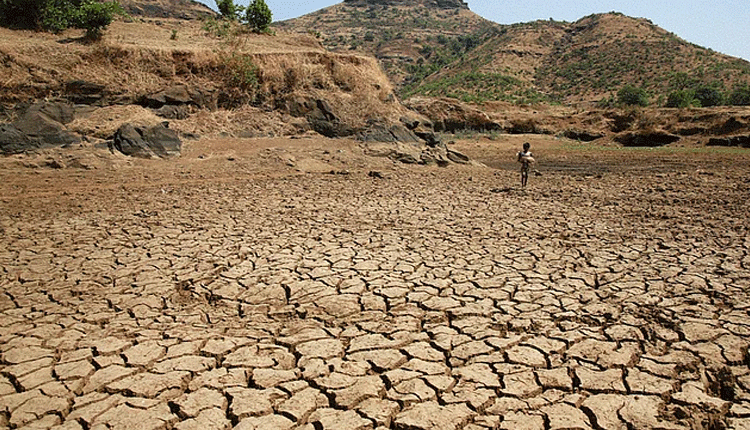
New Delhi: A severe agricultural crisis is unfolding across the country as prolonged drought conditions have impacted 52.5 per cent of India’s landmass, leaving farmers grappling with immense crop losses and mounting debts. According to the India Drought Monitor by IIT Gandhinagar, the affected area jumped from roughly 38 per cent a month ago to over 52 per cent by September 16, 2026, primarily driven by a substantial deficit in monsoon rainfall.

The states of Maharashtra, Karnataka, and Andhra Pradesh are among the worst-hit regions, where water scarcity has drastically reduced agricultural output. In Maharashtra’s Vidarbha and Marathwada regions, crucial cash crops like soybean and cotton have suffered extensive damage. Meanwhile, in Andhra Pradesh, where rainfall plummeted by 53.4 per cent between June and August, the state government has declared 388 mandals across 21 districts as drought-hit, with 283 of them classified as severely affected. In Karnataka, initial assessments peg crop damages at a staggering Rs 18,000 crore across 101 talukas.
For the agricultural community, the immediate fallout is heavily skewed economics. Farmers report that their cultivation costs have far outstripped their anticipated earnings. A farmer from Yavatmal in Maharashtra shared that despite investing Rs 2.75 lakh into his fields, his expected return has crashed to merely Rs 90,000. In extreme cases, farmers are being forced to sell off assets, including livestock, at throwaway prices just to survive the fodder shortage and sustain their families.
In response to the escalating crisis, state governments have rolled out several relief measures, though implementation delays remain a hurdle. The Maharashtra government has declared 305 out of its 358 tehsils as drought-affected, promising an initial aid of Rs 5,000 to the distressed farmers. Furthermore, they have allocated Rs 6,728 crore to boost rural employment, reflecting a sharp rise in families seeking work under the rural employment guarantee schemes as farm incomes dry up. Similarly, the Karnataka government has announced an input subsidy of Rs 2,500 for affected farmers while actively seeking central assistance.
The biggest challenge now looming over the sector is funding the upcoming Rabi crop season. With Kharif crops destroyed and debts piling up, farmers are left with little to no capital for seeds, fertilizers, and irrigation. Without timely financial intervention and swift disbursement of promised government aid, millions of farmers face severe hurdles in sowing their next crop, threatening broader implications for the nation’s food security and rural economy.