

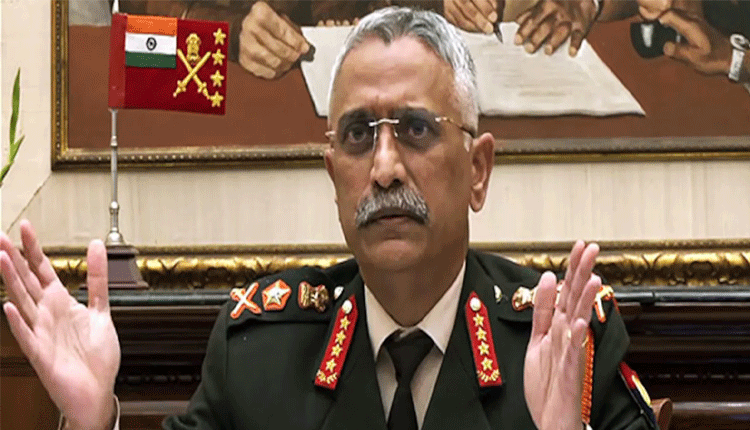
New Delhi: Former Chief of Army Staff General Manoj Mukund Naravane has stated that the aftermath of the Galwan Valley clash clearly demonstrated that a military solution to the border dispute with China is no longer a viable option. Emphasizing the need for diplomacy, he noted that the incident injected a renewed momentum into efforts to resolve the long-standing issue through dialogue and negotiation.

Addressing the complexities of the Sino-Indian border, General Naravane explained that skirmishes are likely to continue in areas where the border perception remains contested. “The issue of our boundary with China remains unresolved. I am deliberately using the word ‘boundary’ because unlike an ‘international border’—which is clearly defined and internationally recognized—the definition of a ‘boundary’ is not as clear,” the former Army Chief remarked.
He cited the Galwan clash as a stark example of such disagreements turning volatile. “Wherever there are such areas of disagreement, we have had clashes, and they will continue in the future,” he added. However, he stressed the most crucial takeaway: “Post-Galwan events have made it clear that in the case of China, a military solution to the border dispute is no longer an option.”
General Naravane underscored that India has firmly established its stance against any unilateral attempts to alter the status quo using force. This resolute position, he believes, has shifted the dynamic and reinforced the necessity of resolving disputes through diplomatic channels, particularly highlighting the importance of the Special Representatives mechanism between the two nations.
“The biggest lesson from Galwan is that India has significantly strengthened its credibility on the world stage—whether at the military, diplomatic, or political level,” General Naravane stated.
The June 2020 Galwan Valley clash marked a severe turning point in India-China relations, leading to a prolonged military standoff in eastern Ladakh. While significant strides have been made recently—including the October 2024 agreement on patrolling arrangements in Depsang and Demchok, and bilateral meetings during the SCO Summit in August 2025—efforts to normalize ties and manage differences continue through sustained diplomatic engagements.