

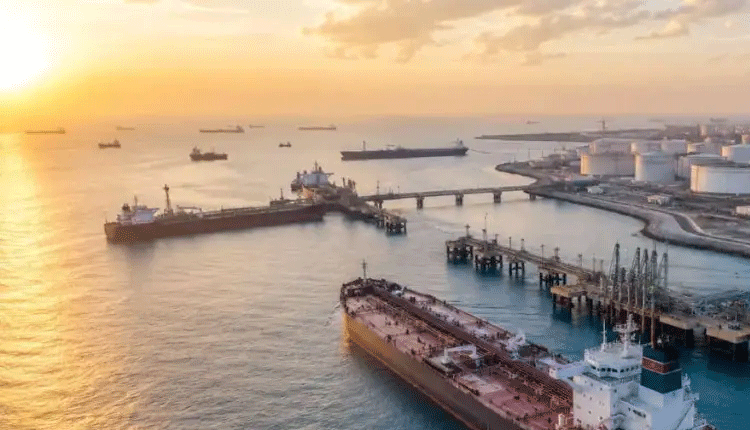
New Delhi: Crude oil exports from the Gulf region have surprisingly surpassed pre-war levels, triggering a battle of narratives over who truly controls the strategic Strait of Hormuz. While US President Donald Trump credits the American Navy for securing the vital maritime trade route, emerging reports suggest that Iran’s tacit approval and an unofficial “toll” system might be the actual reasons facilitating the uninterrupted supply.

According to a Wall Street Journal report, before the US military action against Iran on February 28, 2026, the Gulf exported around 2.3 crore (23 million) barrels of oil per day. Surprisingly, between October 11 and 18, this figure surged to 2.4 crore barrels daily. The Trump administration, currently navigating declining popularity ahead of the mid-term elections, has actively projected this surge as a monumental foreign policy victory. The White House insists that the US Navy has successfully neutralised the Iranian threat, ensuring safe passage for global energy supplies.
However, industry data reveals a far more complex ground reality. A primary driver behind the increased export volume is the heavy reliance on alternative, overland routes. Around 40 percent of the oil exported from the Gulf in September bypassed the Strait of Hormuz entirely, utilising Saudi Arabia’s East-West pipeline and the UAE’s Habshan-Fujairah pipeline. This is a massive jump from the mere 17 percent reliance on these pipelines prior to the February conflict.
Furthermore, suppliers are increasingly resorting to covert ship-to-ship transfers. Smaller vessels reportedly load oil within the Persian Gulf, switch off their tracking signals (AIS) at night to evade scrutiny, and covertly cross the strait. Once safely in the Arabian Sea, they transfer their cargo to waiting Very Large Crude Carriers (VLCCs). Concurrently, intelligence reports suggest that Iran’s leadership, under Supreme Leader Mojtaba Khamenei, is allowing this maritime traffic in exchange for quietly collected transit tolls.
Despite this record supply through Hormuz and alternative routes, international crude and diesel prices remain stubbornly high. President Trump recently addressed this economic paradox, stating, “As you know, record amounts of oil are now being supplied from Hormuz, but we have a problem. Russian refineries are facing numerous attacks. This is having an impact, especially on diesel.”
Despite Washington’s claims, global observers and energy markets remain deeply sceptical, questioning whether the US Navy truly commands the vital chokepoint or if global oil trade is currently operating at Tehran’s calculated discretion.