

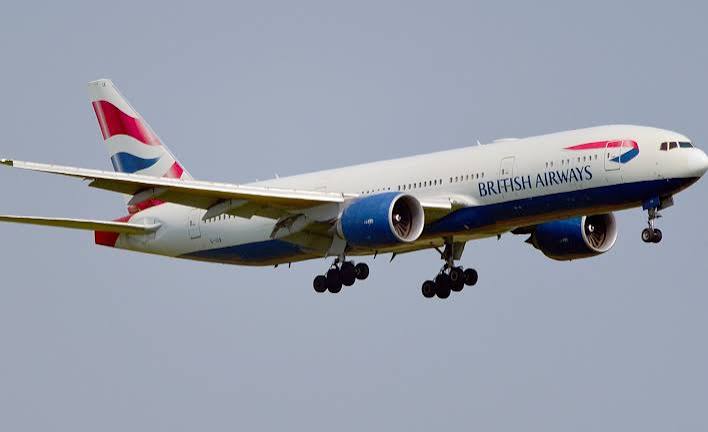
London: A routine transatlantic journey took a terrifying turn on Monday when a Chicago-bound British Airways flight declared a mid-air emergency while flying over Ireland. The Boeing 777-200ER aircraft, operating as Flight BA295, experienced a sudden and rapid descent, forcing the pilots to make a U-turn and divert back to London.

The aircraft had departed from London Heathrow’s Terminal 5 at approximately 12:14 PM local time and was scheduled for an eight-hour and 40-minute journey to Chicago O’Hare International Airport. However, just over an hour into the flight, while cruising at an altitude of 37,000 feet, the crew squawked 7700—the internationally recognised transponder code for a general emergency.
Flight-tracking data from Flightradar24 revealed a dramatic altitude drop. The aircraft plunged from its cruising height down to approximately 9,000 feet in a span of just seven minutes. According to aviation experts, a steep 28,000-foot descent is standard operating procedure for Boeing aircraft experiencing a loss of cabin pressurisation. Pilots must quickly reach an altitude of 10,000 feet or below, where the outside air is thick enough to be breathable without supplementary oxygen.
After dropping to a safe altitude, the flight crew coordinated with air traffic control and initiated a return to the United Kingdom. Because the aircraft was heavily loaded with fuel for the long-haul crossing, it was reportedly around 30 tonnes over its maximum permissible landing weight. Consequently, the plane spent significant time flying in holding patterns over the Bristol Channel to burn off excess fuel before initiating its final approach.
Following nearly five hours in the air, the aircraft touched down safely at London Heathrow at around 5:00 PM.
British Airways officially confirmed the incident, stating that the pilots decided to turn back as a precautionary measure. “The pilots returned to Heathrow following a technical issue,” a spokesperson for the airline said. While the exact nature of the technical snag has not been formally detailed by the airline, reported crew messages and flight data strongly indicate a pressurisation problem as the likely cause for the dramatic mid-air manoeuvre.
The incident highlights the rigorous training and standard operating procedures that flight crews adhere to when ensuring passenger safety during unexpected inflight emergencies. The airline is expected to accommodate the affected passengers on alternative flights to their final destination.