

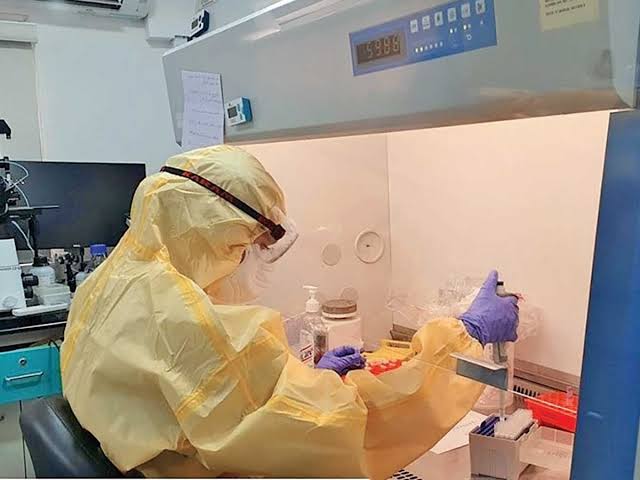
New Delhi: A recent tragic incident at a Siberian research facility has reignited global concerns regarding the rapid proliferation and safety of high-containment biological laboratories. The death of a 28-year-old lab worker in Russia has prompted health experts to question the risks associated with the worldwide surge in Biosafety Level 3 (BSL-3) and Biosafety Level 4 (BSL-4) labs in the post-Covid era.

According to reports, the Russian lab worker, identified as Darya Shipilova, was allegedly working with dangerous pathogens on September 25 when a test tube, purportedly containing plague-causing bacteria, shattered. She subsequently fell severely ill and succumbed in early October. While Russian health authorities have officially attributed her death to an “unknown pneumonia” and have yet to explicitly confirm a plague infection, approximately 200 individuals who came into contact with her have been placed under strict medical observation.
This suspected accident has cast a spotlight on the sheer volume of such facilities globally. Driven by the catastrophic lessons of the Covid-19 pandemic, nations have massively ramped up investments in high-containment labs. The primary objective is to study lethal viruses and bacteria in secure environments to develop rapid diagnostics, vaccines, and life-saving treatments to thwart future pandemics.
A comprehensive global study published in 2025 highlights the massive scale of this expansion. The report identified a total of 3,625 high-containment facilities currently operating worldwide. This massive network includes 3,515 BSL-3 labs spread across 149 countries and 110 maximum-security BSL-4 labs situated in 34 countries. While BSL-3 labs handle pathogens that can cause severe, potentially lethal diseases through respiratory transmission, BSL-4 facilities are designed exclusively for the most dangerous, untreatable pathogens known to humanity.
However, this rapid expansion brings inherent dangers. While advanced laboratory research is crucial for pandemic preparedness, a minor lapse in protocol or an accidental structural breach can trigger devastating global consequences. The World Health Organization (WHO) has repeatedly stressed the critical need for rigorous safety protocols, continuous staff training, and robust monitoring in these facilities.
Furthermore, with rapid advancements in artificial intelligence and biotechnology, scientists are undertaking increasingly complex experiments. While this holds the promise of groundbreaking medical advancements, it also amplifies the potential risks of accidental lab leaks, pushing experts to advocate for a stricter, unified international framework to govern these high-risk scientific endeavours.