

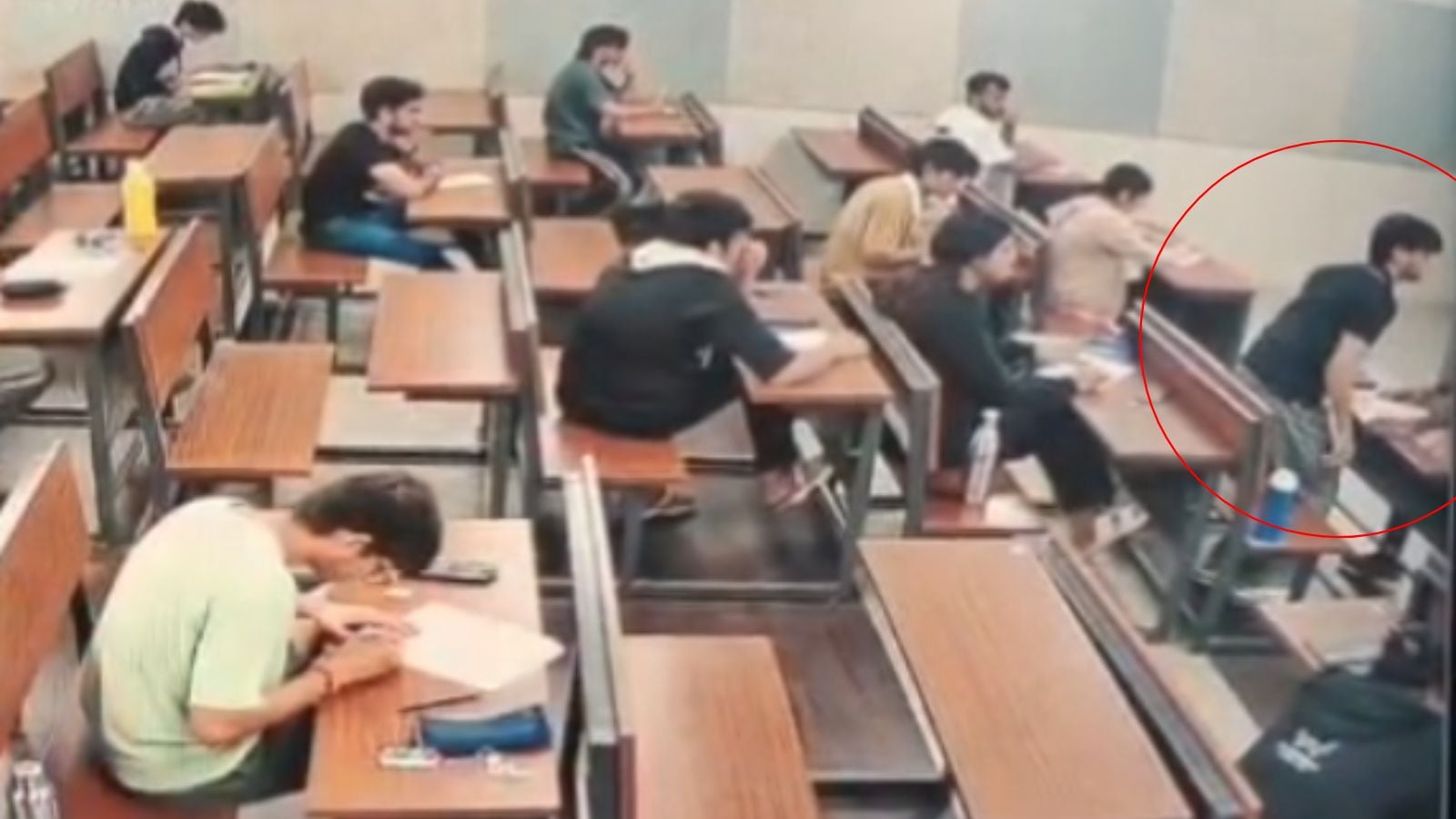
Mumbai: A crucial piece of visual evidence has emerged in the tragic suicide case of Sahil Wakode, a student at the Indian Institute of Technology (IIT) Bombay. A 54-second CCTV footage from an examination hall has surfaced, shedding light on the events that transpired shortly before Wakode took his own life on September 18.

The newly accessed footage shows Wakode, dressed in a black t-shirt, seated at the first desk during an exam. The video captures him allegedly attempting to look at his mobile phone. Moments later, one of the three supervisors present in the classroom approaches his desk. The footage clearly shows a brief interaction during which Wakode stands up, speaks with the teacher, and subsequently hands over his mobile phone before sitting back down.
According to reports, the student was allegedly caught using the artificial intelligence tool ChatGPT on his phone during the examination, which was scheduled to conclude at 1:00 PM. Investigating agencies are now closely analysing the final 20 minutes of the exam to ascertain the exact sequence of events.
Tragically, hours after this incident, Wakode was found hanging in his hostel room in Powai.
Sources close to the investigation revealed that shortly before his death, Wakode made a phone call to a female friend. During this conversation, he reportedly did not mention any caste-based harassment but confessed to his actions in the exam hall. “I made a mistake. My paper also didn’t go well,” he reportedly told his friend. The news of his sudden death severely impacted the friend, who allegedly suffered a panic attack and had to be hospitalised.
The case has drawn widespread attention, particularly following allegations that an IIT Bombay professor, Suryanarayana Doolla, subjected Wakode to caste-based harassment. Professor Doolla has since been sent on leave.
To ensure a thorough probe, a 10-member high-level committee was constituted on Wednesday. Meanwhile, the Mumbai Police Crime Branch has already taken over the investigation and is scrutinising the CCTV footage, which currently serves as the most substantial piece of evidence in the case.