

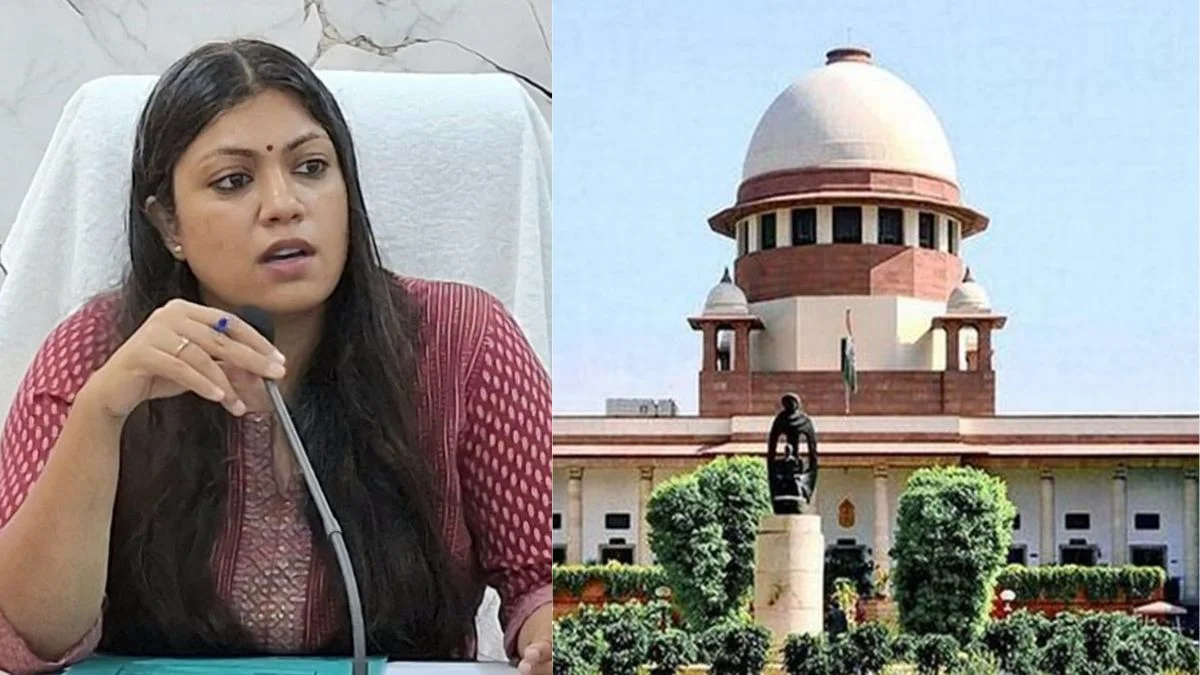
New Delhi: In a significant legal development concerning administrative accountability and the fundamental rights of citizens, Gautam Buddha Nagar District Magistrate (DM) Medha Rupam has moved the Supreme Court to challenge a recent Allahabad High Court order. The contested ruling directed her to pay ₹5 lakh as compensation from her personal salary to a Delhi University student who was wrongfully detained under the National Security Act (NSA).

The controversy centres around the case of Akriti Chaudhary, a student at Delhi University, who was taken into custody under the stringent provisions of the NSA. During the judicial review of her case, the Allahabad High Court concluded that her detention did not hold up to legal scrutiny and was found to be unlawful.
To redress the violation of the student’s liberties, the High Court ordered financial reparations, fixing the compensation amount at ₹5 lakh. However, taking a notably stern view of the administrative lapse, the judiciary mandated that these funds should not be drawn from the state exchequer. Instead, the court issued clear instructions that the entire compensation amount must be recovered directly from the personal salary of the District Magistrate who authorized the detention.
This specific punitive measure has prompted DM Medha Rupam to escalate the matter to the country’s apex court. According to the petition filed by the official, the primary grievance is the personal financial liability imposed upon her for actions undertaken in her official administrative capacity.
The upcoming Supreme Court hearings are expected to scrutinize the legal validity of the High Court’s directive. The apex court will examine whether fixing personal economic liability on a serving bureaucrat for official executive decisions aligns with established legal principles.
Legal observers note that the Supreme Court’s verdict in this matter will likely establish a crucial precedent. It is anticipated to clarify the boundaries of bureaucratic accountability, specifically outlining how compensation responsibilities should be determined when an administrative order is found to violate a citizen’s constitutional rights.