

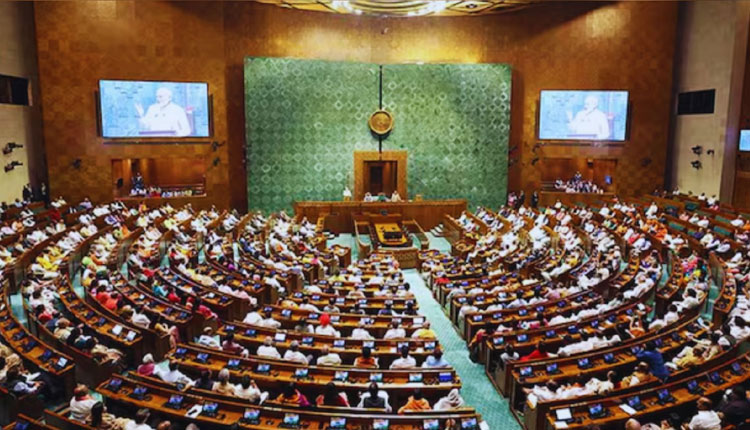
New Delhi: In a significant political development, the central government is reportedly considering convening a short, special sitting of Parliament ahead of the upcoming Winter Session. According to sources within the ruling Bharatiya Janata Party (BJP), the primary objective behind this potential move is to expedite the passage of crucial bills related to the Women’s Reservation Law and the highly anticipated delimitation exercise.

A senior Union Minister on Thursday indicated the possibility of this early sitting. Explaining the government’s procedural flexibility, the minister noted, “A special session of Parliament can be called before the Winter Session. There is no strict rule dictating that the Winter Session must begin in the third week of November.”
The government reportedly weighed two options for pushing the legislative package: either utilizing a dedicated special session or integrating it into the regular Winter Session schedule. According to insiders, BJP allies were previously hinted that the passage was highly probable during the standard Winter Session. However, the Winter Session is expected to commence around November 30 or December 4, leaving a viable window for the government to execute a short special sitting if deemed necessary. Last year, the Winter Session began on December 1.
For the BJP-led National Democratic Alliance (NDA), enacting the Women’s Reservation Act ahead of the 2029 Lok Sabha elections is a priority. Sources suggest that this legislative window represents the final opportunity to ensure the quota is effectively implemented by the 2029 national polls. The comprehensive legislative package reportedly bundles the core constitutional amendment bill alongside the Delimitation Bill and the Union Territories Law (Amendment) Bill.
Procedurally, the government holds an advantage. Since the Monsoon Session, which was adjourned sine die on August 13, has not yet been officially prorogued, the government is not bound by the mandatory 14-day notice period required to summon a fresh session. Consequently, a sitting can be convened on any given day.
However, the path to passing the constitutional amendment remains mathematically rigorous. Any such amendment mandates a clear majority of the total membership in both the Lok Sabha and the Rajya Sabha, coupled with the backing of at least two-thirds of the members present and voting in each House separately. Notably, these amendments cannot be cleared through a joint parliamentary sitting, underscoring the need for broad political consensus.