

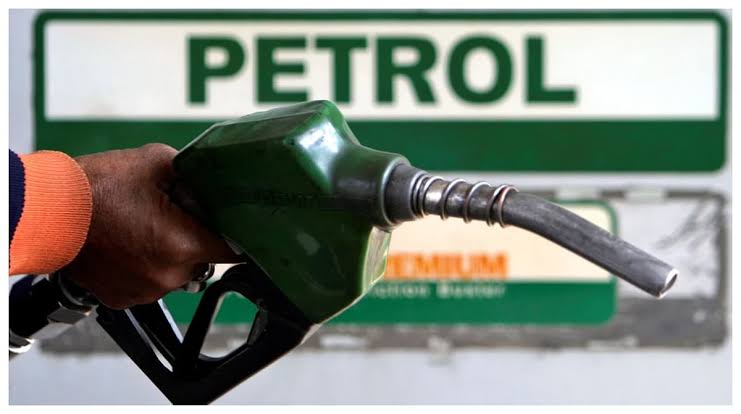
New Delhi: Escalating geopolitical tensions between the United States and Iran have once again rattled the Middle East, sending international crude oil prices soaring and sparking fears of an imminent hike in petrol, diesel, and LPG prices across India. The strategic Strait of Hormuz, a crucial maritime chokepoint for global energy trade, has witnessed a series of alarming attacks, severely disrupting the movement of commercial oil and gas tankers.

On Wednesday, the international oil market was thrown into a state of panic following three consecutive attacks on cargo vessels near the ports of Iraq and the United Arab Emirates (UAE). The United Kingdom Maritime Trade Operations (UKMTO) confirmed that the vessels were targeted by unidentified projectiles. According to reports, a tanker southeast of Iraq’s Al-Faw peninsula was struck, while another vessel near Port Rashid in the UAE reported structural damage and water ingress after a suspected attack.
The immediate fallout of these maritime aggressions has been a sharp spike in global energy costs. Brent crude prices registered an upward rally of nearly 2.5 percent following the incidents. For India, the financial impact is particularly severe. Data released by the Petroleum Planning and Analysis Cell (PPAC) revealed that the price of the Indian crude basket surged to $108.91 per barrel on September 8. This represents a staggering 20 percent jump compared to the average price of $90.19 per barrel recorded in August.
Industry experts are drawing stark parallels to the oil crisis witnessed earlier this year in May 2026. During that period, similar regional conflicts drove the Indian crude basket to $106.26 per barrel, forcing state-owned oil marketing companies to hike retail petrol and diesel rates four times to offset massive import costs.
With the crude basket now hovering near the critical $109 mark, consumers are bracing for another potential inflationary shock. India heavily relies on external sources to meet its energy needs, importing more than 85 percent of its crude oil and approximately 60 percent of its LPG requirements. A significant portion of these vital energy imports is routed directly through the highly vulnerable Strait of Hormuz.
As the standoff between Washington and Tehran intensifies, maritime security in the Persian Gulf remains severely compromised. If disruptions continue to inflate India’s import expenditures, oil marketing companies may soon have no choice but to pass the financial burden down to the common consumer.