

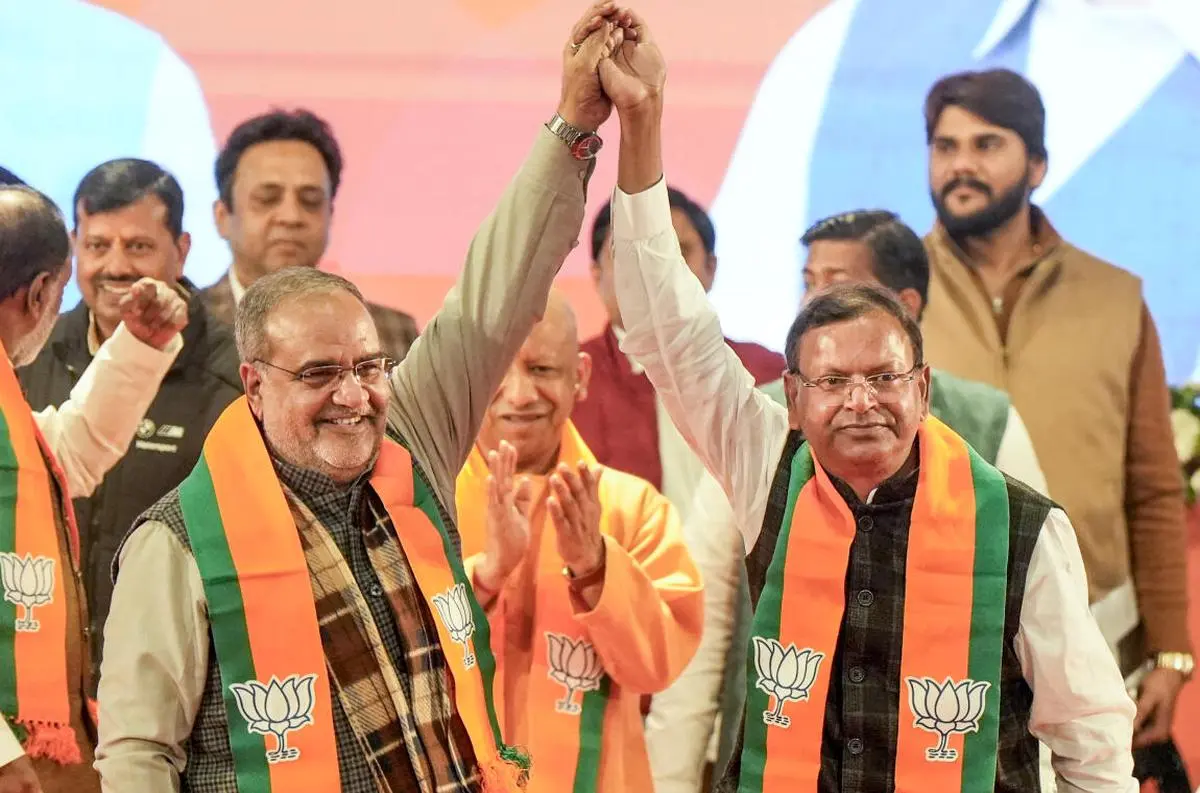
New Delhi: Gearing up for the 2027 Uttar Pradesh Assembly elections, the Bharatiya Janata Party (BJP) has overhauled its organizational machinery by announcing new regional committees. In a strategic move to fortify its voter base, the ruling party has accorded major representation to Other Backward Classes (OBC) leaders, focusing prominently on consolidating the crucial non-Yadav OBC vote bank.

The constitution of the new regional teams reflects a meticulously calculated social and regional balancing act. According to party insiders, extensive deliberations were held at the highest organizational levels, involving Chief Minister Yogi Adityanath, both Deputy Chief Ministers, the state party president, and the general secretary (organization), before finalising the appointments.
The most striking feature of the newly announced committees is the significant elevation of leaders from various backward communities. Leaders belonging to the Verma, Lodhi, Nishad, Jat, Gurjar, Maurya, Kushwaha, Shakya, and Saini castes have been handed crucial responsibilities. While the primary focus remains heavily tilted towards the OBCs, the party has also ensured adequate representation for Dalits, upper castes, and other diverse social groups to craft a formidable and inclusive social coalition.
Beyond caste dynamics, the BJP has strongly emphasized regional equilibrium. Key organizational responsibilities have been strategically distributed among leaders hailing from Western UP, Awadh, Purvanchal, Bundelkhand, and Central UP, ensuring that no geographic region feels sidelined in the political setup.
The newly appointed regional leadership has been tasked with actively mobilizing the party cadre down to the district, mandal, and grassroots booth levels. Their immediate mandate includes taking the state and central governments’ welfare schemes directly to the public, increasing outreach among marginalized social segments, and rebuilding the organizational structure in areas where the party exhibited weakness in recent electoral contests.
Political observers note that the BJP intends to enter the 2027 electoral battlefield well in advance. This structural revamp is a clear indication that the party believes the upcoming contest will not rely solely on the government’s administrative performance, but equally on micro-level booth management and precise social engineering.
Furthermore, the new committees highlight a strategic blend of seasoned politicians and fresh blood. By utilizing the tactical expertise of veteran functionaries while simultaneously empowering younger faces, the BJP aims to groom its second line of leadership, ensuring long-term organizational dominance in the politically crucial state of Uttar Pradesh.
Comments are closed.