

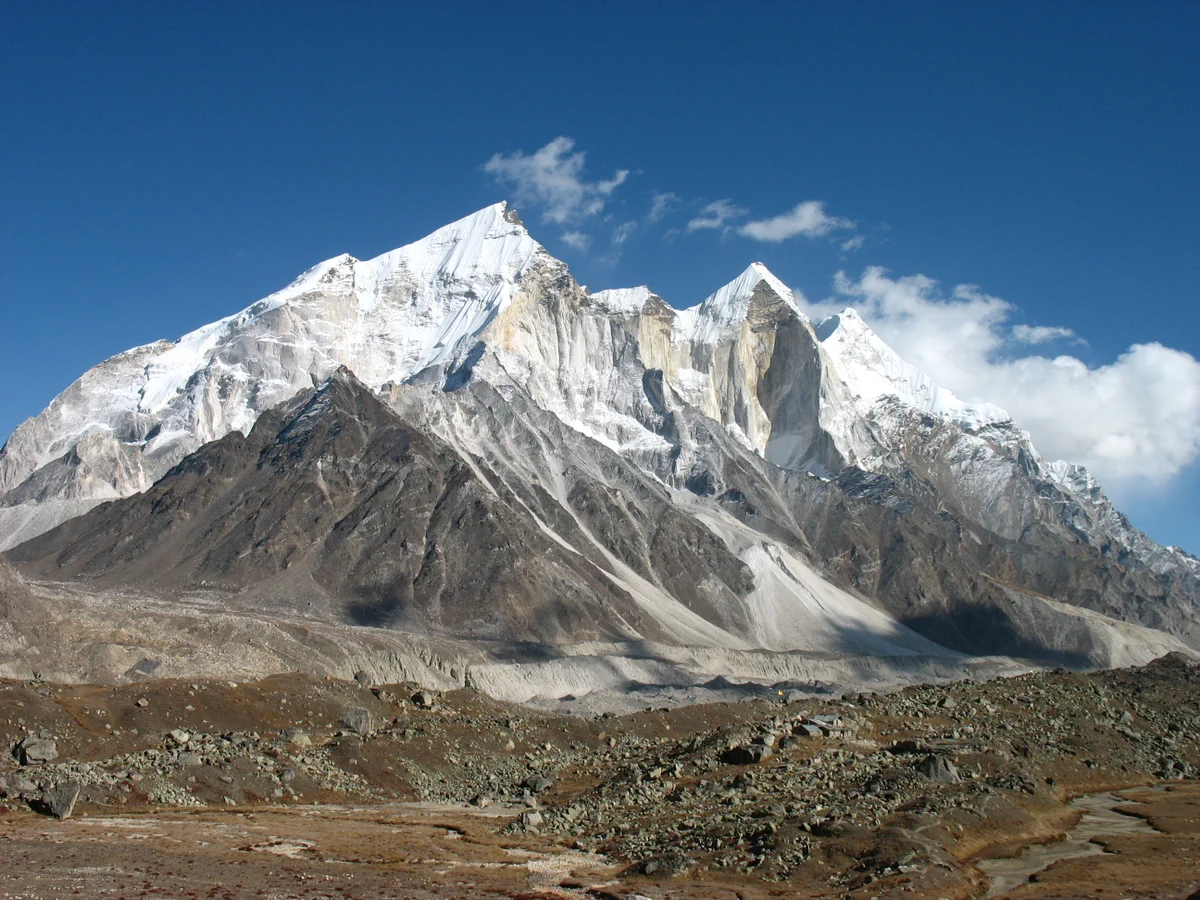
Dehradun: Following recent reports regarding the formation of small glacial lakes in the Gangotri glacier region, the Wadia Institute of Himalayan Geology (WIHG) has issued a clarification ruling out any immediate threat of a Glacial Lake Outburst Flood (GLOF). The scientific assessment was prompted after the Uttarakhand State Disaster Management Authority (USDMA) sought a detailed report to evaluate potential risks associated with these newly spotted water bodies.

Relying on recent satellite imagery, on-ground field observations, and the region’s hydrological profile, scientists at the Dehradun-based institute concluded that the situation does not warrant alarm.
According to the WIHG report, the observed water bodies are “supraglacial lakes”—small, temporary pools formed primarily due to the natural melting of ice. As temperatures rise, meltwater temporarily accumulates in minor depressions and pits on the glacier’s surface. Experts noted that the size and water volume of these lakes fluctuate rapidly based on ambient temperatures, the rate of snowmelt, and local rainfall. Often, these lakes disappear naturally when the water drains out, refreezes, or when the glacier’s surface shifts.
“The lakes observed in the Gangotri glacier area are relatively small, and the volume of water they hold is very low,” scientists from the institute highlighted. Unlike large, moraine-dammed reservoirs that carry severe risks, these surface pools lack the capacity to accumulate massive amounts of water. Consequently, available scientific evidence indicates no immediate danger of large-scale flash floods or sudden GLOF events.
However, experts cautioned that the potential hazard of any glacial lake cannot be determined merely by its visual appearance. A thorough risk assessment requires analyzing multiple complex factors, including the lake’s exact water volume, the structural integrity of the surrounding ice and debris, potential natural drainage paths, and local topographical features.
To ensure absolute safety and early warning, the WIHG, in collaboration with the USDMA, is maintaining strict vigilance over the Himalayan glaciers. The agencies are utilizing continuous satellite data to track the region. Furthermore, specialized scientific teams conduct periodic ground surveys whenever necessary to detect and evaluate structural anomalies in real time, ensuring that any future risks are identified well in advance.