

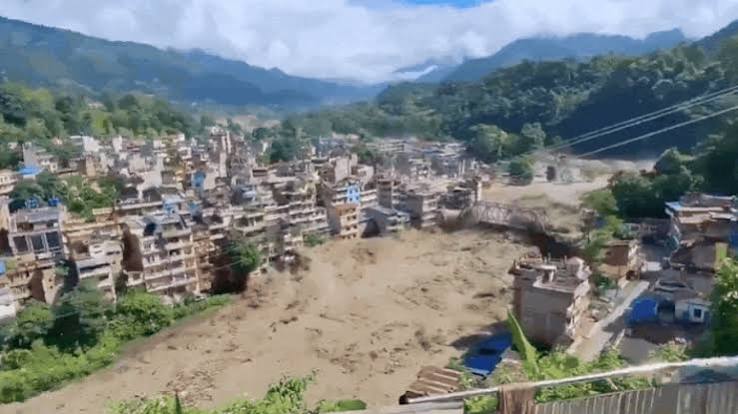
Kathamandu: Addressing the aftermath of the devastating August 26 floods, Nepal Prime Minister Balendra Shah announced on Saturday that the government will preserve the DNA samples and identification evidence of all unclaimed bodies. The statement comes as the death toll from the disaster continues to mount, with 675 bodies recovered from various districts so far.

In a statement posted on social media on Saturday evening, Shah urged the public not to be misled by rumors regarding the government’s handling of the deceased. He clarified that bodies identified by their families are being promptly handed over to relatives.
“Only those bodies that remain unidentified will be preserved. DNA and other evidence that can help prove their identity will be kept safe,” Shah stated. He further added that the recovered bodies are being stored in airtight bags and managed under the Unidentified and Unclaimed Bodies Management (First Amendment) Directive, 2026.
The catastrophe, triggered by massive flooding in the Bhotekoshi river in Rasuwa, has caused unprecedented loss of life and infrastructure across riverside districts. The 675 bodies have been recovered from multiple locations, including Rasuwa, Dhading, Nuwakot, Chitwan, Tanahun, Gorkha, Nawalparasi East, and Nawalparasi West.
Emphasizing that search, rescue, and relief operations remain the government’s top priority, the Prime Minister noted that federal, provincial, and local authorities are working in tandem to restore communications and provide medical treatment.
A critical rescue mission is currently unfolding at the Trishuli 3 ‘A’ Hydropower Project in Rasuwa. According to a statement from the Nepal Prime Minister’s Office (PMO), authorities have spent the last two days attempting to rescue people trapped inside the project’s tunnel. An 82-member joint task force—comprising 62 Nepal Army personnel and 20 from the Armed Police Force and Nepal Police—has been deployed to clear the debris and open the tunnel’s entrance. However, adverse weather conditions in the region are heavily hampering the evacuation efforts.
Meanwhile, international assistance has bolstered local efforts. An Indian rescue team has arrived in Trishuli to aid in the ongoing operations. The Indian contingent has already conducted a preliminary aerial reconnaissance (recce) of the Chilime and Langtang areas via helicopter and is mapping out further rescue strategies as required.
Comments are closed.