

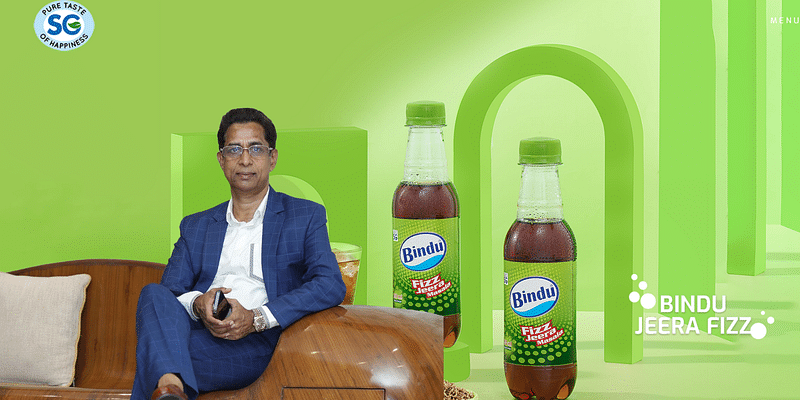
Bengaluru: In an Indian beverage market historically dominated by multinational carbonated giants, the meteoric rise of Bindu Masala Zeera stands out as one of the country’s most compelling grassroots business success stories. From humble beginnings behind the wheel of an auto-rickshaw to building an enterprise valued at approximately Rs 800 crore, founder Satya Shankar has reshaped the packaged beverage landscape by championing authentic Indian flavours.

The turning point arrived in 2002 during Shankar’s travels across North India. After tasting traditional jaljeera for the first time, he was struck by its distinct flavour and refreshing appeal. However, he also noticed a glaring market inefficiency: while global cola giants occupied shelf space everywhere with uniform packaging and hygiene standards, traditional Indian drinks remained largely unorganised, restricted to roadside vendors and local stalls.
Driven by the belief that indigenous formulations deserved modern, hygienic packaging, Shankar began experimenting with indigenous spice blends. After perfecting the recipe, he launched Bindu Masala Zeera.
Breaking into the beverage sector posed massive challenges. Global players like Coca-Cola and PepsiCo maintained an iron grip on metropolitan retail chains, supermarkets, and prime refrigeration units. Rather than engaging in a cash-heavy marketing war in urban centres, Shankar executed a masterstroke in distribution.
Bindu shifted its entire focus to rural markets, semi-urban pockets, roadside tea stalls, bus stands, and local paan shops across Southern and Western India—locations where multinational competition was minimal. Relying purely on authentic regional taste and strong word-of-mouth rather than high-decibel advertising campaigns or celebrity brand ambassadors, Bindu built immense consumer loyalty.
Today, Bindu Masala Zeera has expanded into a formidable powerhouse in the domestic beverage segment, forcing larger competitors to take notice of the regional flavour category it helped pioneer.
Despite this commercial triumph, the journey underscores an ongoing debate in retail logistics: why traditional Indian beverages, despite commanding loyal consumer bases in tier-2, tier-3, and rural markets, continue to fight for prime shelf visibility against global soft drinks in modern urban supermarkets. Shankar’s enterprise, however, has proven that deep rural distribution and authentic product positioning can build a homegrown corporate giant from the ground up.
Comments are closed.