

New Delhi: As the auspicious festival of Raksha Bandhan approaches on Friday, August 28, families across the country are preparing to celebrate the cherished bond between brothers and sisters. While tying the sacred thread is the focal point of the festival, adhering to the traditional, scripturally mandated rituals—particularly the ‘Tilak Vidhi’—is believed to bring immense prosperity, health, and longevity to the brother.

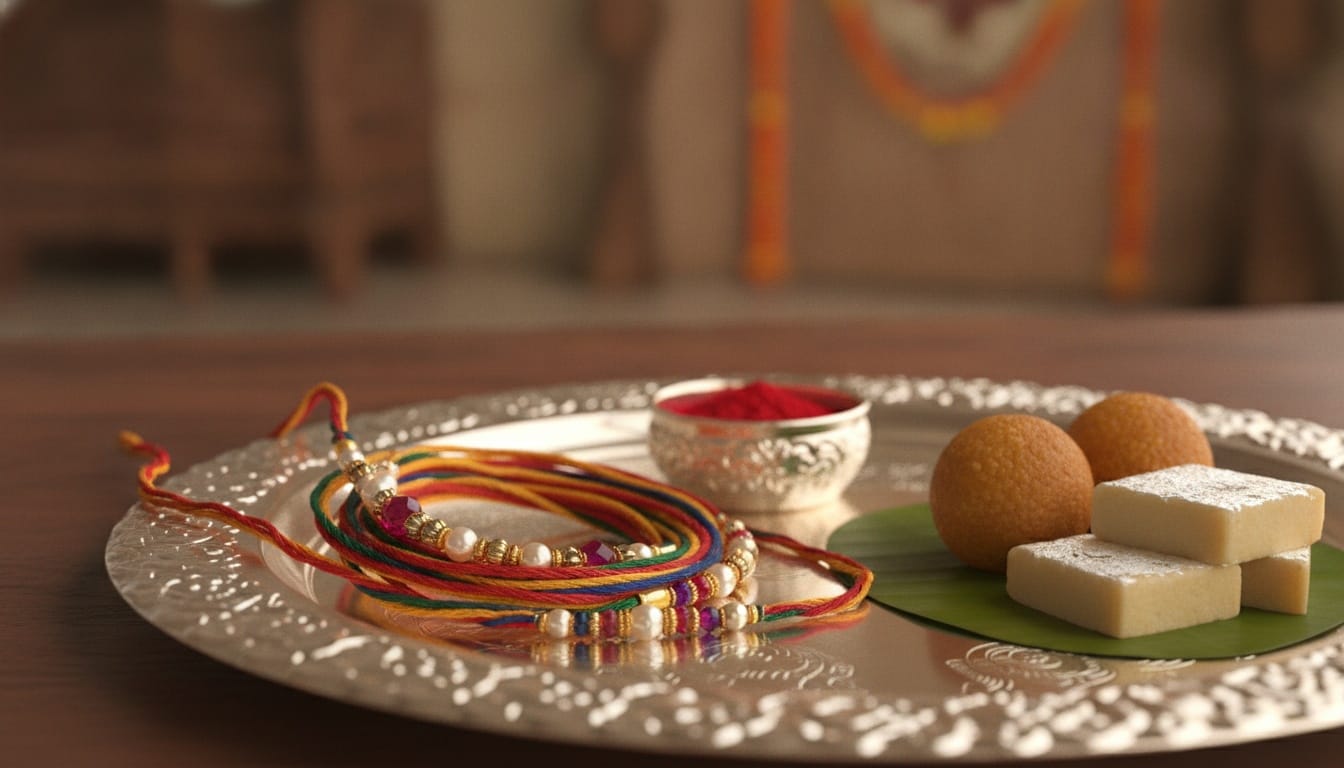
According to Vedic Astrologer Chandresh Sharma, whose insights were recently published by TV9 Hindi, proper preparation and directional alignment are crucial before beginning the ceremony. A traditional puja thali must be prepared with specific items: Roli, Akshat (unbroken rice grains), Chandan (sandalwood), a lighted lamp (diya), sweets, and the Rakshasutra (Rakhi).
Before applying the tilak, the seating arrangement requires special attention. The brother must be seated facing either the East or the North, and his head should be respectfully covered with a clean cloth or cap. The sister should similarly face the East or North. This precise alignment, according to traditional texts, is vital for attracting positive energy and ensuring divine blessings for the household.
When it comes to applying the tilak, the method holds deep symbolic meaning. The sister must use the thumb or ring finger of her right hand to apply the Kumkum or Chandan. “The tilak should always be applied in a bottom-to-top motion, which symbolizes progress and upward mobility in life,” the report notes.
Following the tilak, Akshat is gently pressed onto the brother’s forehead. Experts caution that the rice grains used must be completely intact. Broken rice is considered inauspicious, whereas unbroken grains symbolize continuous good fortune and wholeness.
Once the tilak is correctly applied, the sister performs the Aarti. This step is considered essential for warding off the evil eye and dispelling any surrounding negative energies. Only after the Aarti is completed should the Rakhi be tied, specifically on the brother’s right wrist. This sacred thread acts as a spiritual and protective shield.
The ceremony traditionally concludes with the sister offering sweets to her brother, a gesture intended to infuse their relationship with lifelong sweetness. By following these age-old guidelines with pure devotion, the festival not only ensures the brother’s holistic well-being but also deeply reinforces the eternal sibling bond.
Comments are closed.