

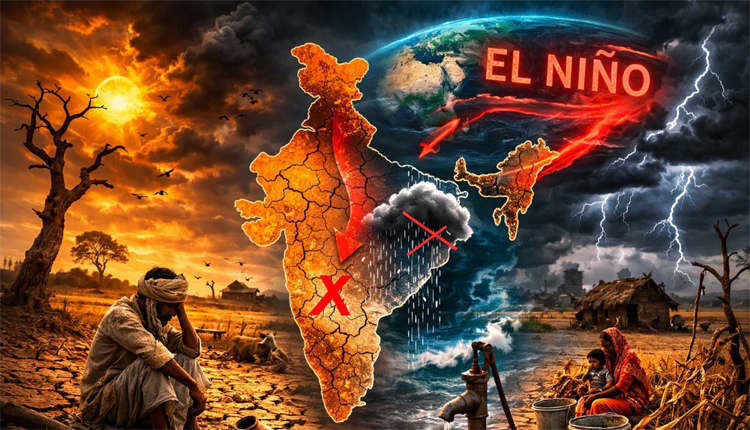
New Delhi: Global weather patterns face major disruptions as meteorologists warn of a potentially historic El Niño brewing in the Pacific Ocean, which could surpass any event recorded since the 19th century. The intensifying climate phenomenon is projected to accelerate global average temperatures, raising concerns that either 2026 or 2027 could become the hottest year in recorded history.

During an El Niño event, sea surface waters in the eastern Pacific Ocean become unusually warm, transferring enormous amounts of heat into the atmosphere and altering worldwide wind and precipitation cycles. While typical strong El Niño events see sea surface temperatures rise by 1°C to 2°C above baseline, current projections indicate anomalies could reach nearly 3°C.
The scale of the emerging system appears poised to eclipse major previous super El Niño episodes, including those of 1982–83, 1997–98, and 2015–16. Meteorologists have noted the unprecedented nature of the current forecasts, with Met Office scientist Adam Scaife remarking that such powerful predictive signals for an El Niño event have not been seen before.
The phenomenon carries significant implications for regional weather stability, including the Indian monsoon. Historically, intense El Niño conditions have closely correlated with suppressed or deficient rainfall across the subcontinent, prompting close monitoring by weather agencies given the potential impact on agriculture and water reserves. Globally, while some regions face increased risks of extreme precipitation and flooding, others will likely encounter prolonged dry spells and heatwaves.
Climatologists note that the peak atmospheric warming effect of an El Niño typically lags sea surface heating by several months, increasing the likelihood that 2027 may emerge as the warmest year on record. With baseline global temperatures already elevated due to long-term climate change, scientists estimate that global average temperatures in 2027 could temporarily surpass 1.5°C above pre-industrial levels, triggering significant climate stress across multiple continents.
Comments are closed.