

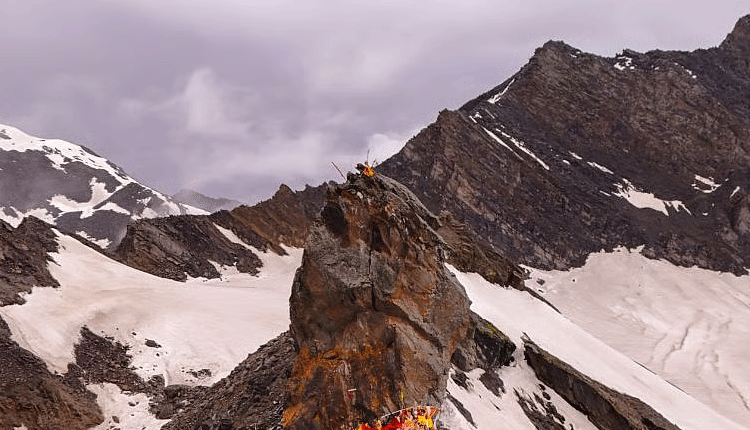
Shimla: Known globally as one of the most gruelling religious treks, the Shrikhand Mahadev Yatra in Himachal Pradesh’s Kullu district presents a test of extreme endurance and unwavering faith. Situated at a staggering altitude of approximately 18,570 feet, this sacred pilgrimage is often considered more challenging and perilous than the renowned Amarnath Yatra.

At the heart of this arduous journey lies a massive, naturally formed rock structure revered by devotees as a manifestation of Lord Shiva. The unique rock formation, which resembles a towering Shivling, draws thousands of devotees every year who undertake the perilous climb just for a glimpse. According to religious beliefs, completing this tough journey to perform the ‘Jalabhishek’—offering holy water collected from natural springs along the route—is the ultimate symbol of devotion and spiritual dedication.
The journey to Shrikhand Mahadev, usually organised in July, demands a gruelling 32 to 35-kilometre one-way trek from the base camps. Pilgrims must navigate extremely steep gradients, incredibly narrow trails, and unstable geographical terrains. As the elevation increases, the depleting oxygen levels add a severe physical strain, making the climb exceptionally demanding and breathless. Due to the high risk involved, only medically fit individuals are permitted to embark on this journey.
This year, however, the much-anticipated Shrikhand Mahadev Yatra 2026 has been suspended until further orders. Following a joint inspection by the district administration, forest department, and mountaineering experts, the authorities determined that the severe weather conditions and melting glaciers posed an unprecedented threat. Reports indicated a high risk of rockfalls, flash floods, and landslides along the traditional routes. Prioritising public safety, the Kullu district administration made the difficult decision to call off the pilgrimage for the current season.
Comments are closed.