

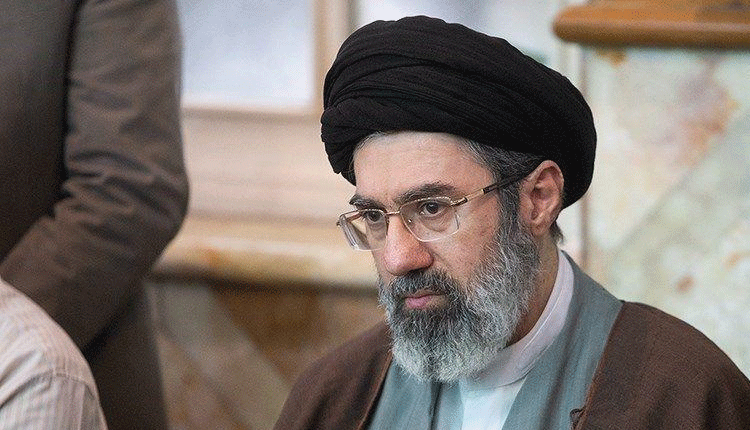
Washington: The strategic landscape in West Asia is witnessing a massive shift as Iran launches intense retaliatory strikes against American military installations. Under the leadership of Mujtaba Khamenei, Iran has initiated Operation Nasr 2, unleashing a multi tap strategy that has severely tested United States air defense systems across the Arab world.

The recent wave of coordinated attacks targeted US bases and associated facilities in Jordan, Bahrain, Kuwait, Qatar, and the United Arab Emirates. Reports indicate that over 100 American soldiers have been injured in these extensive strikes. The offensive sends a clear message that the new Iranian leadership is determined to retaliate and not step back from direct confrontation.
Deploying a complex mix of Shahed suicide drones, hypersonic weapons, and advanced ballistic missiles like Emad, Zulfiqar, and Kheibar Shekan, the Iranian Revolutionary Guard Corps executed simultaneous multi front attacks. This swarm tactic successfully overwhelmed allied air defense networks. The situation escalated to a point where the Pentagon, having exhausted over 1400 Patriot missiles, is now forced to rely on outdated 30 year old PAC 2 missile systems.
One of the most significant strikes occurred in Bahrain, where an Amazon Web Services server complex was targeted with alarming precision. Iran claimed that its drones bypassed US defense systems to strike the data centre directly. Satellite imagery revealed that an Iranian warhead pierced the reinforced concrete structure, creating a massive 19 meter wide crater and destroying the internal server infrastructure. Iranian officials alleged that the US Central Command was using this cloud network to plan strikes against Tehran.
The unprecedented accuracy of these attacks has raised serious alarms in Washington. American media reports suggest that both the Pentagon and the Central Intelligence Agency suspect Iran is receiving crucial intelligence or technical support from Russia and China. United States Secretary of Defense Pete Hegseth also acknowledged the possibility of foreign assistance bolstering Iranian military capabilities.
The latest wave of Operation Nasr 2 utilised a three tier attack formation. Shahed drones, with a range of 2000 kilometres, were first deployed to confuse defense radars. These were followed by Emad ballistic missiles equipped with manoeuvrable reentry vehicles and rapid launch Zulfiqar missiles. Iranian forces claim these modern solid fuel weapons are specifically designed to evade advanced defense shields.
As the conflict deepens, the continuous barrage threatens the perceived security guarantees provided by the United States to its Arab allies. The changing dynamics highlight a volatile era in regional geopolitics, with both sides locked in a dangerous military escalation.
Comments are closed.