

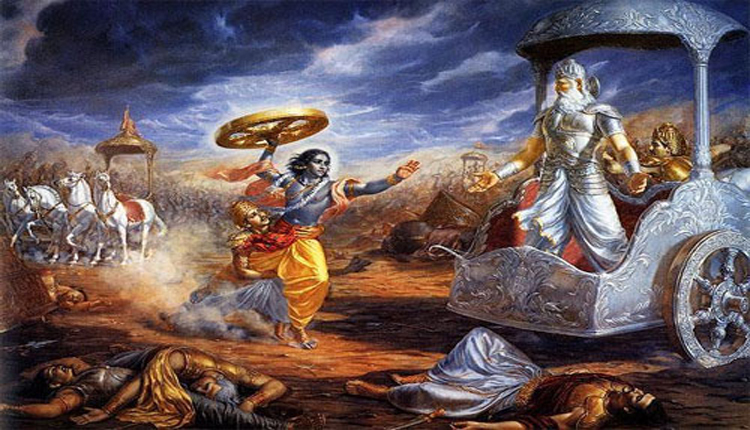
New Delhi: The epic of Mahabharata is not just a historical battle narrative but a profound philosophical text that continues to shape cultural beliefs in modern times. Among its many moral lessons, three powerful curses pronounced during and after the great war of Kurukshetra are widely believed by devotees to hold significance even in the present era of Kaliyuga.

The ancient scripture highlights the monumental conflict between the Pandavas and Kauravas, representing the eternal struggle between righteousness and injustice. Beyond the fierce battlefield, the emotional and spiritual consequences of the war resulted in severe pronouncements that transcended time and generations.
One of the most widely discussed curses was given by Yudhishthira to the entire female race. Following the death of Karna, Kunti revealed that the fallen warrior was actually her eldest son. Overwhelmed with immense grief and regret for fighting his own brother, Yudhishthira proclaimed that no woman would ever be able to conceal a secret completely. This mythological narrative is still often cited in traditional folklore today.
Another major event involves Lord Krishna and his wrath upon Ashwatthama. Driven by a desire to avenge his father Dronacharya, Ashwatthama slaughtered the sleeping sons of the Pandavas and directed a deadly celestial weapon at the womb of Uttara to end the lineage of Arjuna. An enraged Lord Krishna cursed Ashwatthama to wander the earth aimlessly with unhealing wounds until the very end of Kaliyuga. Many local legends still claim sightings of the immortal warrior across various locations.
The third significant curse was placed upon King Parikshit. While on a hunting expedition, the king felt insulted when a meditating sage named Shamik ignored him. In a fit of anger, Parikshit placed a dead snake around the neck of the sage. Learning of this disrespect, the son of the sage cursed the king to die of a snakebite within seven days. Traditional texts state that the serpent king Takshak fulfilled this curse, an event that formally marked the beginning of the Kaliyuga era.
While these ancient tales do not possess scientific validation, they remain deeply embedded in the Indian cultural consciousness. They serve as enduring allegories for the severe consequences of unchecked anger, hidden truths, and immoral actions. These stories continue to offer powerful moral warnings to contemporary society and keep the philosophical essence of the Mahabharata alive.
Comments are closed.