

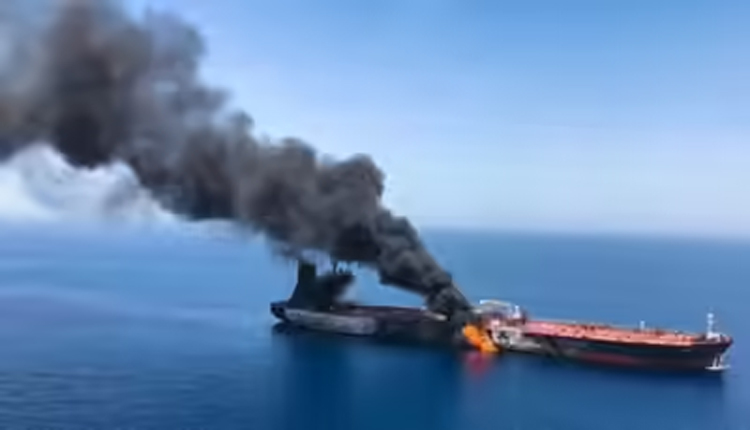
New Delhi: Twenty four Indian seafarers onboard an oil tanker off the coast of Oman were reported safe after a fire broke out on the vessel amid heightened security concerns near the Strait of Hormuz. The incident involved MT Marivex, a Palau flagged oil and chemical tanker, and triggered urgent coordination between Indian and Omani authorities.

According to available reports, the fire was reported around 1.30 pm on June 8. The Forward Seamen’s Union of India had earlier posted an urgent appeal on X, saying that 24 Indian seafarers onboard a vessel near Hormuz required immediate assistance. The post tagged Indian authorities, including the Indian Navy, the Ministry of External Affairs and the Ministry of Ports, Shipping and Waterways.
Opesh Kumar Sharma, Director in the Ministry of Ports, Shipping and Waterways, later said that all Indian seafarers were safe as per available information. He said the ministry was coordinating with the Ministry of External Affairs, Indian missions abroad, the Indian Navy and the Ministry of Defence to ensure their safety.
The Indian Embassy in Oman also said it was in touch with Omani authorities and was monitoring the situation. Later, the embassy thanked Omani authorities for their swift response and the rescue of all 24 Indian crew members onboard MT Marivex.
Some media reports claimed that the vessel may have caught fire after a suspected drone or missile attack, though official confirmation on the exact cause of the incident was not immediately available. Reports said the vessel was located off the coast of Oman, close to the strategically important Strait of Hormuz, a key maritime route for global energy shipments.
The incident came at a time of rising tension in West Asia following the escalation between Iran and Israel. Maritime traffic around the Persian Gulf and the Strait of Hormuz has remained under close watch due to fears of disruption to shipping and energy supplies.
For Indian families and the maritime community, the confirmation of the crew’s safety brought major relief. The episode also underlined the risks faced by seafarers operating in sensitive sea routes during periods of regional conflict and the importance of quick coordination between maritime agencies, foreign missions and naval authorities.
Comments are closed.