

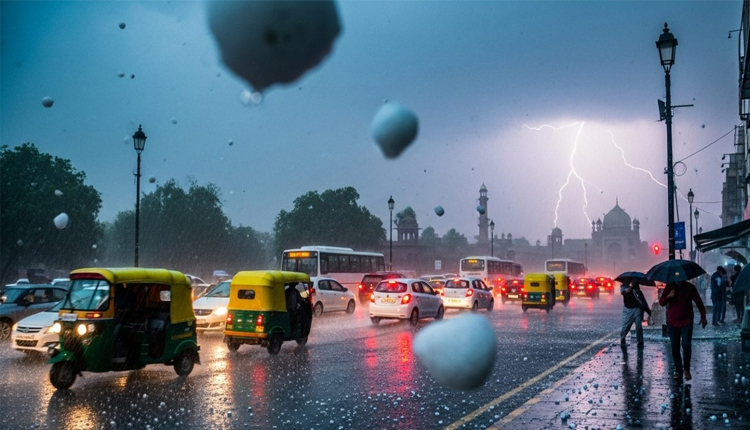
New Delhi: India is witnessing sharply changing weather conditions, with the India Meteorological Department issuing alerts for heatwave, thunderstorms, gusty winds and heavy rain across several parts of the country. While northern and central India continue to face intense heat, rain and storm activity are expected to bring temporary relief in many regions.

According to weather updates, heavy rain and thunderstorm alerts have been issued for several states within the next 24 hours. Strong winds may reach speeds of up to 80 kilometres per hour in some places. The affected areas include parts of Delhi, Uttar Pradesh, Bihar, Jharkhand, Uttarakhand, Himachal Pradesh, Jammu and Kashmir, West Bengal, Punjab, Rajasthan, Madhya Pradesh, Assam, Kerala and Tamil Nadu.
Delhi and neighbouring areas have already seen a sudden change in weather. Dust storms and rain hit parts of the national capital on June 9, prompting the IMD to issue red and orange alerts for some areas. The warning included the possibility of thunderstorms, lightning, hail and moderate rainfall.
However, heatwave conditions remain a major concern in parts of north India. Kanpur recorded 44 degrees Celsius, and IMD warned of intense heatwave conditions over the next 24 hours. The high temperature has raised public health concerns, especially for children, elderly people and those working outdoors.
The monsoon has also started influencing weather patterns in southern and eastern India. The IMD said the southwest monsoon set in over Kerala on June 4, 2026. Heavy to very heavy rainfall is likely over Kerala and Karnataka, while rain activity is also expected in parts of Tamil Nadu and the northeast.
In Jharkhand, the monsoon is likely to arrive by Saturday, bringing possible relief from the ongoing heat and supporting agricultural preparations.
Weather experts have advised people to remain alert, avoid unnecessary travel during storms, stay away from weak structures and trees, and take precautions against heat during daytime. With both heatwave and rain alerts active in different regions, the coming days will be important for public safety, farming activity and travel planning.
Comments are closed.