

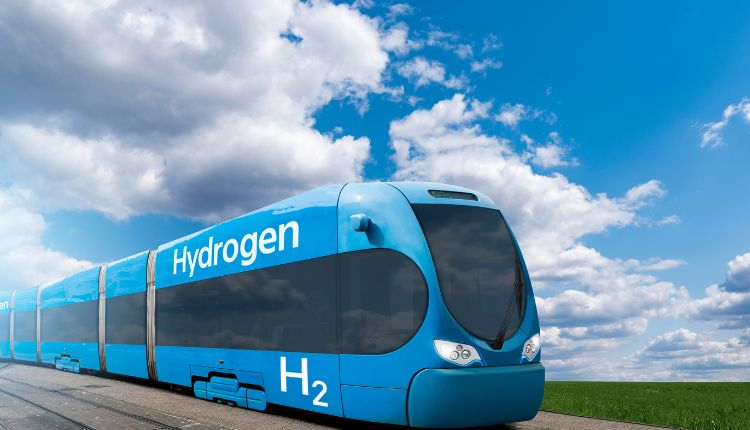
New Delhi: India’s first hydrogen powered train has received approval from the Railway Ministry to operate on the Jind to Sonipat route in Haryana, marking a major step towards greener and cleaner railway technology. The 10 coach train will run on hydrogen fuel cell technology and is being seen as an important milestone in Indian Railways’ push for sustainable transport.

According to the report, the train will not depend on diesel or conventional electric traction in the usual way. Instead, hydrogen fuel cells will generate electricity to power the train. This means the train will produce no harmful emissions during operation, making it a cleaner alternative to diesel based rail transport.
The train has been designed as a 10 coach DMU set and can run at a maximum speed of 75 kmph. It uses Distributed Power Rolling Stock technology, under which power is distributed across the train rather than being concentrated in a single engine. This helps improve performance and energy use.
The hydrogen train will have two driving power cars of 1,200 kilowatt capacity each, giving it a total power capacity of 2,400 kilowatts. Railway officials have described it as the world’s longest broad gauge hydrogen trainset and also among the most powerful hydrogen trains in its category.
The Railway Ministry gave its approval after technical clearance from the Research Designs and Standards Organisation and safety tests by the Commissioner of Railway Safety. The train’s oscillation trial was successfully completed in March 2026, after which safety and operational standards were reviewed.
However, officials have clarified that the approval does not mean the train will start passenger service immediately. Several technical procedures, maintenance protocols and final safety checks still have to be completed before the train is opened for passengers.
The Jind to Sonipat route has been finalised for this pilot project because Haryana is being developed as an important centre for India’s first hydrogen train initiative. The project is expected to help Indian Railways test clean fuel technology in real operating conditions before expanding it to other routes.
The move also places India among countries experimenting with hydrogen based rail systems as part of their green transport goals. If successful, the project could reduce dependence on fossil fuels, lower pollution and open the way for a new generation of clean energy trains in India.
Comments are closed.