

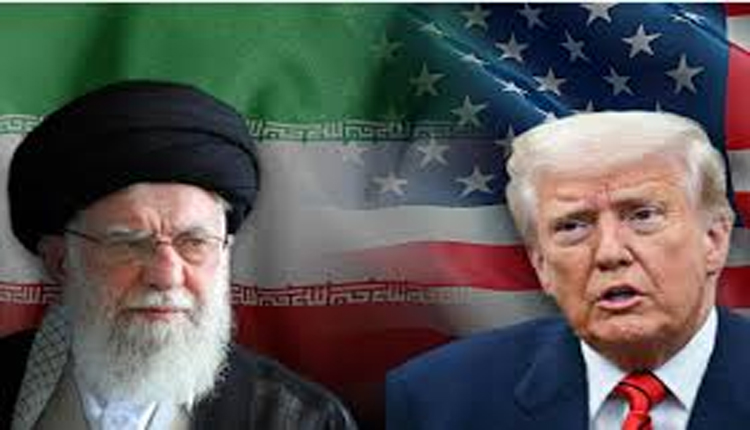
New Delhi: A fresh debate has begun around the possible direction of a US Iran nuclear understanding, with concerns being raised over whether Tehran could be walking into a strategic trap similar to the one Libya faced under Muammar Gaddafi. The discussion has gained ground after claims that Iran may be ready to hand over its enriched uranium to the United States as part of a possible deal.

According to the TV9 Bharatvarsh report, the reported proposal has triggered serious questions among experts and observers. The central concern is whether Iran’s Supreme Leader will risk giving up what many see as the country’s biggest security shield in return for the promise of sanctions relief, unlocking of frozen assets and a possible easing of tensions in West Asia.
The report draws a comparison with Libya, where Muammar Gaddafi agreed in 2003 to give up his nuclear and missile programmes. At that time, Gaddafi expected that Libya would be accepted by the international community. However, eight years later, in 2011, NATO action and internal unrest led to his removal from power. The report says this history is now being cited by those who fear that Iran could face a similar risk if it gives up its nuclear leverage.
The article also refers to Israel’s position, noting that Prime Minister Benjamin Netanyahu has previously supported a strict “Libya model” approach for Iran. In such a scenario, Iran would first be pushed to surrender its uranium and weaken its deterrence, after which pressure for regime change could grow.
The Ukraine example has also been brought into the discussion. The report mentions the 1994 Budapest Memorandum, under which Ukraine gave up nuclear weapons in exchange for security assurances. In contrast, North Korea is cited as an example of a country that retained its nuclear capability despite sanctions.
However, the report also notes that Iran is not Libya. Tehran has a strong regional network, including armed allies and missile capabilities across West Asia. Still, if a future US administration walks away from the deal, as Donald Trump did with the 2015 nuclear agreement in 2018, Iran may find it difficult to rebuild its enrichment capacity quickly.
For now, the uranium handover remains part of reported American claims and preliminary discussions. Iran has not given final approval. But the debate has already raised a larger question: can a nuclear deal bring peace, or could it weaken Iran at a decisive moment in West Asia’s power struggle?
Comments are closed.