

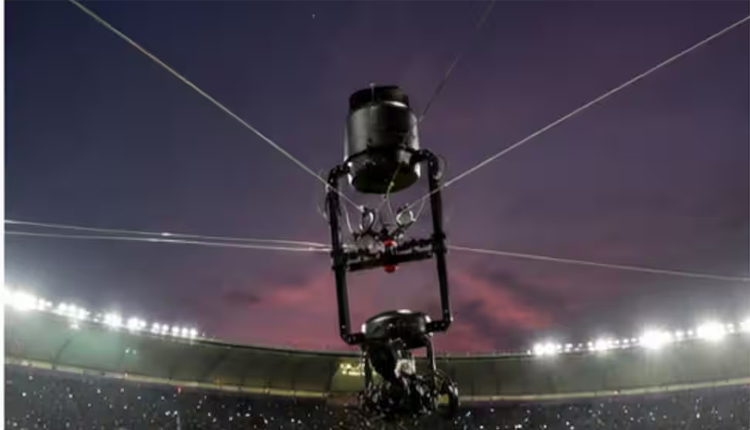
New Delhi: The Indian Premier League is not just about big hits, close finishes and packed stadiums. A major part of its television appeal comes from advanced broadcast technology, and Spidercam has become one of its most recognisable features.
Seen gliding above the field during matches, Spidercam is a flying camera system that moves with the help of four strong cables fixed to motorised units around the stadium. It allows broadcasters to capture sweeping aerial views, close shots of players and dynamic angles of a bowler’s run-up or a batter’s stance.
The system is controlled through a computer-assisted panel. When the operator moves the camera, the motors either pull or release the cables, allowing it to travel up, down, forward, backward and sideways with smooth precision. High-resolution lenses and stabilisation technology ensure that the footage remains sharp even when the camera moves at speed.
Many viewers often wonder how the device avoids colliding with players. The answer lies in constant monitoring. A dedicated team watches match movement closely and adjusts the camera’s height and speed according to the situation on the field. The system also comes with safety sensors and backup mechanisms. Although cricket balls have occasionally hit Spidercam cables, such incidents remain rare.
In IPL broadcasts, Spidercam helps create a more immersive viewing experience. It brings fans closer to the action by offering angles that traditional cameras cannot provide, from behind-the-batter visuals to dramatic stadium-wide shots.
However, the technology is expensive. A complete Spidercam setup can cost crores of rupees, as it involves specialised cameras, cables, computer-controlled equipment and a trained professional crew. That is why it is mostly used in major tournaments and international-level matches.
Comments are closed.