

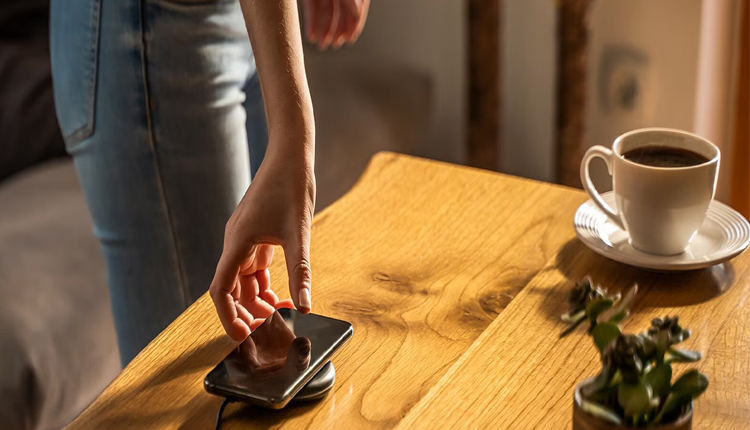
New Delhi: Wireless charging may have made life easier for smartphone users, but tech experts say the convenience could come with a hidden cost.

As wireless charging pads become common in homes, cars and even office furniture, concerns are growing over whether the technology silently affects long-term battery health.
Unlike wired charging, wireless charging works through electromagnetic induction. A charging pad creates a magnetic field that transfers power to a receiver coil inside the smartphone.
However, the process is less efficient compared to traditional wired charging, causing a portion of energy to convert into heat instead of directly charging the battery.
Experts say this extra heat is the biggest concern. Lithium-ion batteries, which power most modern smartphones, are sensitive to high temperatures. Frequent exposure to heat can gradually reduce battery capacity and affect long-term performance. According to reports, wireless charging can lose nearly 20-30 per cent energy in the form of heat, while wired charging is far more efficient.
That said, experts also clarify that wireless charging does not instantly damage a phone’s battery. Most modern smartphones now come equipped with thermal management systems designed to control overheating during charging sessions. The actual impact depends heavily on user habits and charger quality.
Tech specialists recommend using certified wireless chargers, removing thick phone covers during charging and avoiding gaming or heavy video streaming while the device is on the charging pad. Many also advise limiting battery charging to around 80 per cent to improve long-term battery life.
For users who prioritise battery health over convenience, wired charging still remains the safer and more efficient option. But for occasional use, experts believe wireless charging is unlikely to cause any serious damage if used carefully.
Comments are closed.