

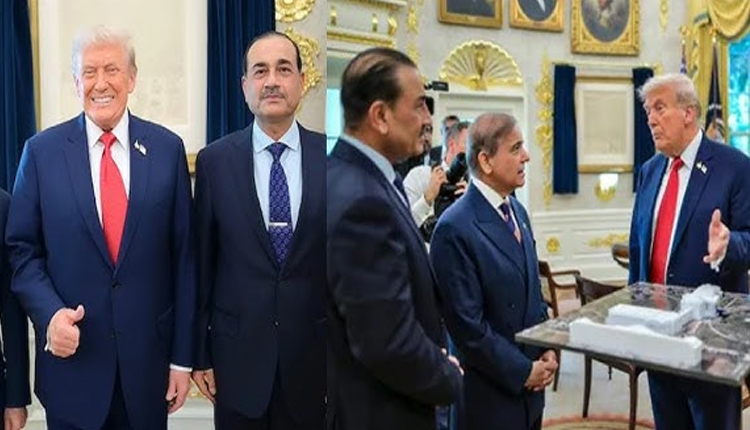
Islamabad: The highly-anticipated second round of peace talks between the United States and Iran in Islamabad has collapsed, dealing a severe blow to diplomatic efforts aimed at defusing regional tensions.

Despite Pakistan’s attempt to play peacemaker, the two nations failed to engage in direct or indirect dialogue, leaving crucial issues unresolved.
The diplomatic breakdown was triggered by Iran’s steadfast refusal to meet the US delegation, which included Middle East envoy Steve Witkoff and advisor Jared Kushner. Tehran insisted that any communication must remain indirect and relayed a formal list of demands to Pakistani mediators. A primary condition set by Iran was the immediate lifting of the US naval blockade on Iranian ports and the strategic Strait of Hormuz.
Following meetings with Pakistan’s top civilian and military leadership, including Prime Minister Shehbaz Sharif and Army Chief Asim Munir, Iranian Foreign Minister Abbas Araghchi departed for Oman.
Calling the visit “fruitful,” Araghchi posted on X (formerly Twitter) that Iran had shared its framework for ending the war, adding, “Have yet to see if the U.S. is truly serious about diplomacy.”
In a swift and decisive response to Iran’s snub, US President Donald Trump cancelled his delegation’s trip to Pakistan. Taking to his Truth Social platform, Trump stated, “I have just cancelled the trip of my representatives. Tremendous waste of time traveling, too much work!” He further mocked the Iranian leadership, claiming, “Nobody knows who is in charge… We hold all the cards, they have none! If they want to talk, all they have to do is call!!!”
The failure of the talks, despite unprecedented security lockdowns in Islamabad, underscores Pakistan’s limited influence as a mediator. With Iran shifting its diplomatic focus to Oman and Russia, the prospect of an immediate US-Iran resolution remains bleak.
Comments are closed.