

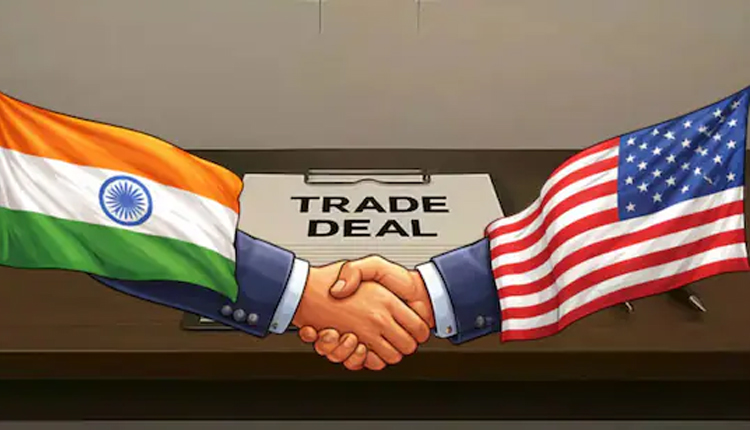
New Delhi/ Washington: India and the United States have unveiled a framework for an interim trade agreement, injecting fresh momentum into their pursuit of a comprehensive bilateral trade agreement (BTA).

The joint announcement, following extended negotiations amid tariff tensions, marks a historic step in deepening economic ties and reshaping global supply chains.
In a joint statement released on February 6, both nations pledged to swiftly implement the framework and finalise the interim deal, aiming for a mutually beneficial BTA.
Union Commerce Minister Piyush Goyal hailed it as a triumph under Prime Minister Narendra Modi’s leadership, posting on X: “This strong framework opens the doors of a $30 trillion market for Indian exporters, especially MSMEs, farmers, and fishermen.” He projected millions of new jobs for women and youth through boosted exports.
Key highlights include the US reducing reciprocal tariffs on Indian goods to 18% (from higher levels), with zero tariffs on select items like generic pharmaceuticals, gems and diamonds, and aircraft parts. This benefits Indian sectors such as textiles, apparel, leather, footwear, plastics, rubber, organic chemicals, home décor, handicrafts, and machinery. In exchange, India will eliminate or slash tariffs on US industrial goods and various agricultural products, including tree nuts, fruits, soybean oil, wine, spirits, and others.
The deal safeguards India’s sensitive farm sectors — maize, wheat, rice, soy, poultry, dairy, ethanol, tobacco, vegetables, and meat — ensuring no compromise on farmers’ interests or rural livelihoods.
US President Donald Trump, who earlier announced the pact, signed an executive order removing a 25% punitive tariff on India linked to Russian oil purchases, effective immediately, as India commits to shifting towards US energy imports (potentially including Venezuela). India intends to buy $500 billion worth of US energy products, aircraft, precious metals, technology goods, and coking coal over five years, while expanding trade in tech components like those for data centres.
Both sides will continue talks on generics, non-tariff barriers, and other issues, targeting a formal agreement by March. Industry leaders view this as a confidence booster for investors, improving competitiveness and strategic partnerships.
Comments are closed.