

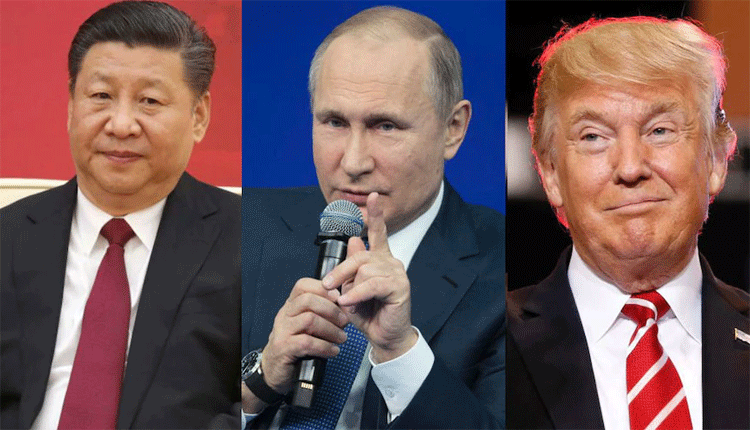
Shenzhen: The world’s top three nuclear powers—the United States, Russia, and China—are currently engaged in high-level discussions to establish new regulations regarding the integration of Artificial Intelligence (AI) in nuclear weapons systems. Driven by the potential global security threat of machines taking over critical defence mechanisms, the three nations are working towards a consensus to ensure that the ultimate decision to launch a nuclear strike remains strictly under human control.

According to a report by the South China Morning Post (SCMP), these crucial negotiations are taking place ahead of the Asia-Pacific Economic Cooperation (APEC) summit, scheduled to be held in Shenzhen, China, on November 18 and 19. The upcoming summit is highly anticipated, with a potential meeting expected between US President Donald Trump, Chinese President Xi Jinping, and Russian President Vladimir Putin.
Interestingly, the trilateral agenda appears to be prioritizing the safe use of AI and nuclear security over other pressing geopolitical issues like the ongoing Ukraine war and North Korea’s nuclear programme. Experts suggest this shift is because finding common ground on AI protocols is currently more viable than resolving deep-seated differences over Ukraine and Pyongyang.
The core focus of these talks is determining how AI should be utilized within the command and control systems of nuclear arsenals. All three countries are reportedly pushing for a binding agreement that explicitly prohibits delegating the authority of a nuclear launch to autonomous machines.
However, challenges remain. While the US is advocating for China to join broader nuclear arms limitation talks, Beijing has historically resisted, arguing that its nuclear stockpile is significantly smaller than those of the US and Russia. Instead, China seems more amenable to discussing transparency and information sharing. Meanwhile, Russia is proceeding with caution regarding formal bans on AI, fearing that strict regulations might limit its military capabilities and strategic decision-making freedom.
As the APEC meeting approaches, the global community will be watching closely to see if these major powers can finalise a landmark agreement on preventing accidental nuclear warfare, managing missile test notifications, and officially keeping the nuclear button in human hands.