

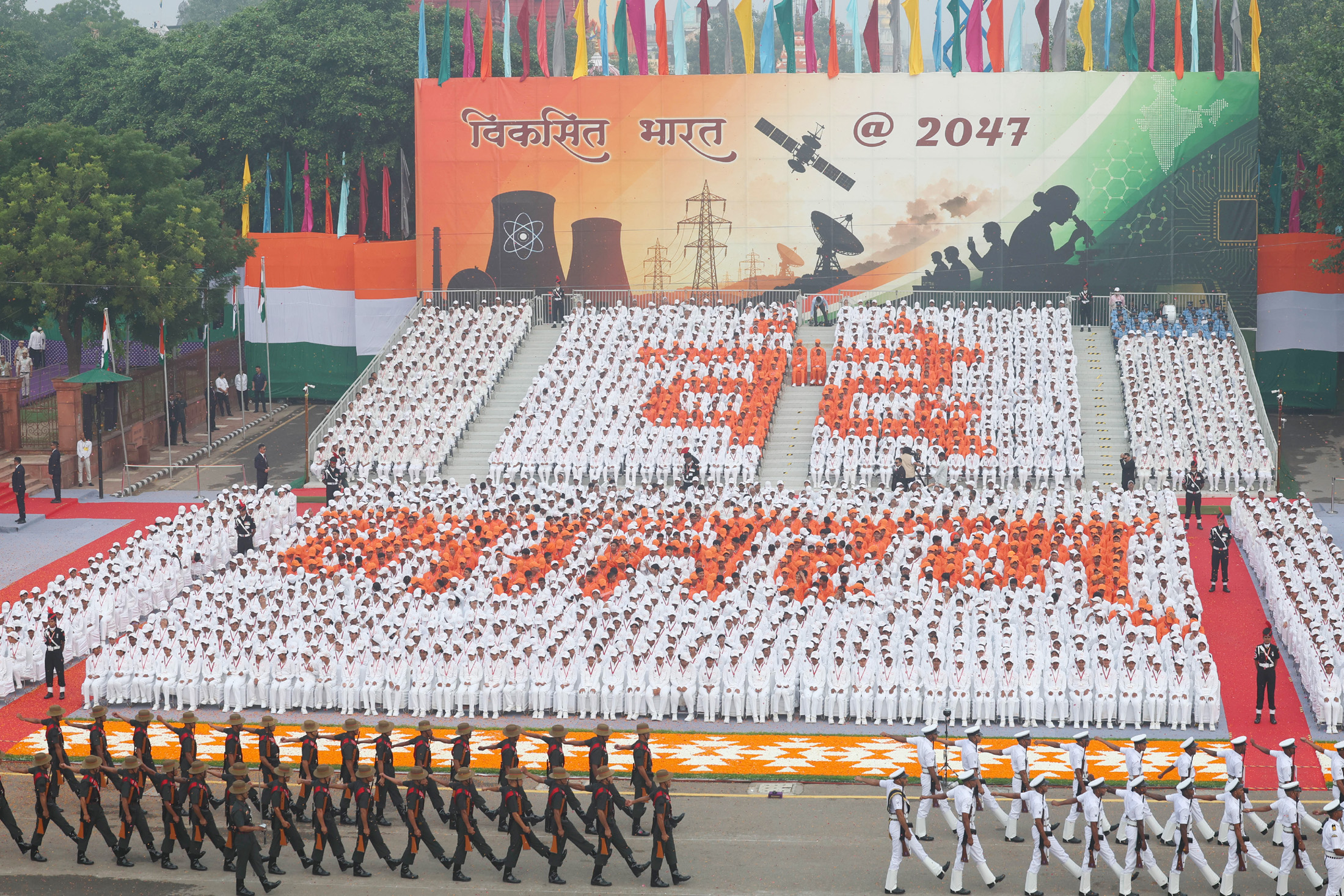
New Delhi: India proudly celebrates its Independence Day on August 15 every year, with the Prime Minister hoisting the tricolour at the historic Red Fort and addressing the nation. This year, Prime Minister Narendra Modi continued this grand tradition. However, a lesser known chapter of Indian history reveals that for nearly 17 years before the actual freedom in 1947, Indians passionately celebrated their Independence Day on January 26.

The roots of this historic date trace back to the late 1920s when a fierce debate emerged within the Indian National Congress. While some leaders favored acquiring Dominion status under the British Empire, young visionaries like Jawaharlal Nehru and Subhas Chandra Bose strongly demanded complete freedom. The shift in perspective officially began during the 1927 Madras session. The Congress gave the British government a one year ultimatum to grant Dominion status. When the British completely ignored this demand, the political leadership hardened its stance.
In December 1929, the Congress held its momentous Lahore session under the presidency of Jawaharlal Nehru. It was here that the historic resolution for Purna Swaraj or Complete Independence was passed. The leaders declared that nothing less than total freedom would be their ultimate goal. To ignite a nationwide mass movement, they selected January 26, 1930, as the first official Independence Day. On this chosen day, citizens across the country hoisted the national flag, took out massive processions, and publicly pledged for freedom. Even though the country was still legally under British rule, this day marked the emotional and political declaration of an independent India.
This tradition of celebrating January 26 as Independence Day continued for the next 17 years. The massive shift in the global political landscape following the Second World War eventually forced the British to leave India. The British Parliament passed the Indian Independence Act of 1947, dividing the territory into two independent nations, India and Pakistan.
The last Viceroy of India, Lord Mountbatten, specifically chose August 15, 1947, as the official date for the transfer of power. Consequently, August 15 became the legally recognized Independence Day. However, to honor the deep emotional connection and historical significance of January 26, the newly formed Indian government deliberately chose this very date in 1950 to enact the Constitution, forever immortalizing it as Republic Day.
Comments are closed.