

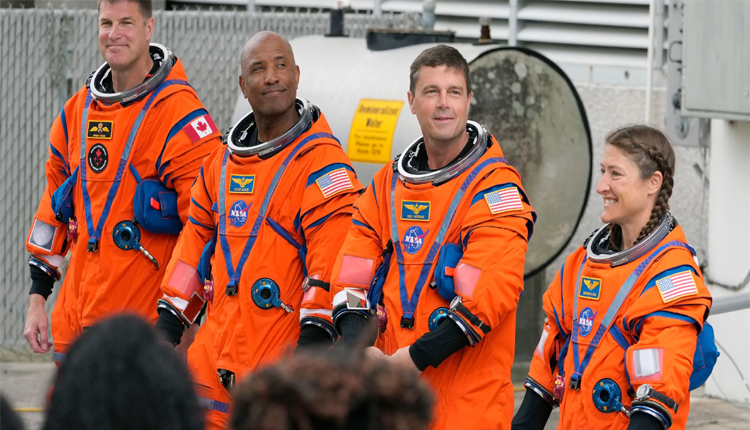
People around the world are waiting for a historic moment that many thought they would never see again. NASA is preparing to launch Artemis II, the first crewed mission to fly around the Moon in over 50 years since the Apollo era, today.
Four astronauts, Commander Reid Wiseman, Pilot Victor Glover (who will be the first Black astronaut to travel to deep space), Mission Specialist Christina Koch (the first woman heading to lunar orbit), and Canadian Space Agency’s Jeremy Hansen (the first non-American on such a mission), will board the Orion spacecraft on top of the powerful SLS rocket.
Over the next 10 days, they will circle Earth and the Moon, coming within about 6,000 miles of the lunar surface, and test life support systems, navigation, and other key equipment needed for future landings.
This mission is special not only because it marks a return to the Moon, but also because of the bigger goals behind it. Scientists are interested in lunar regions that have water ice, rare earth elements, iron, titanium, and helium. In the future, this water could be used for drinking, making oxygen, and even creating rocket fuel, which could allow for longer stays on the Moon and future trips to Mars.
The mission also shows that a new global space race is underway. While the US moves forward with Artemis, China plans to land its own astronauts by 2030. The 1967 Outer Space Treaty bans ownership claims, but the competition for resources is real and intense. Artemis II is the stepping stone for a sustainable human presence beyond Earth. For millions watching from India and across the globe, the proposed launch is more than a rocket taking off — it is humanity once again daring to reach for the stars.