

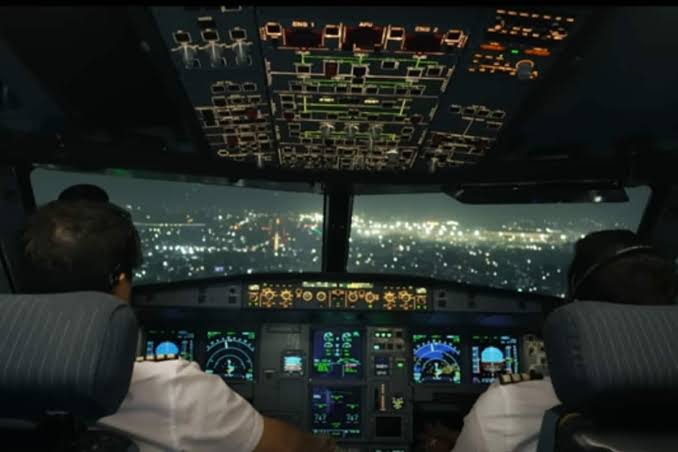
New Delhi: A year after the tragic Air India plane crash, the exact sequence of events leading to the disaster remains a mystery to investigators and the public alike. Whenever a major aviation disaster occurs, it inevitably reignites a common, pressing question among the masses: why do airlines not simply install CCTV cameras inside flight cockpits to record exactly which switches were flipped and what human errors occurred?

While capturing a visual record of the cockpit seems like a logical and straightforward solution to decode aviation accidents, industry experts point out that the reality involves a complex web of technological limitations, exorbitant costs, and fierce pushback from aviation personnel.
According to aviation engineers, there are currently only two viable pathways to implement cockpit video recording, both of which present massive logistical challenges. The first option requires engineering a completely new, highly durable crash-proof video recorder. Existing flight data recorders, commonly known as black boxes, are designed to store audio efficiently. Accommodating heavy video files would instantly exhaust standard hard drive capacities. Developing and installing these advanced, heavy-duty storage systems would demand significant capital investment from airlines.
The second technological route involves live-streaming the cockpit feed directly to ground control. However, transmitting continuous video data from an altitude of 35,000 feet requires immense satellite internet bandwidth. Industry analysts estimate that if airlines absorbed this astronomical recurring cost, the financial burden would be transferred directly to passengers, potentially inflating standard flight ticket prices by three to four times.
Yet, the ultimate barrier to cockpit surveillance is neither technology nor money—it is the immense power of pilot unions and their demand for workplace privacy.
Aviation unions fiercely oppose the installation of cameras, arguing that the cockpit is their everyday workplace. Subjecting pilots to 24/7 visual surveillance is viewed as an extreme invasion of privacy that creates a hostile, high-stress working environment. Because commercial pilots are highly skilled and limited in number, their unions wield substantial negotiating power to seamlessly block such strict monitoring protocols.
Furthermore, pilots express valid fears regarding the potential misuse of this footage. There is widespread concern that airline management could exploit continuous camera feeds to unfairly dismiss pilots over minor, non-critical mistakes. More distressingly, unions fear that in the event of a tragedy, the final, harrowing moments of a flight crew’s lives could be leaked to the public and sensationalized by the media.
Ultimately, the enduring absence of CCTV cameras in commercial aeroplanes is the result of a delicate stalemate: airlines are deeply focused on cost-cutting and maintaining profitability, while powerful pilot unions remain resolute in protecting their fundamental right to workplace privacy and dignity.
Comments are closed.