

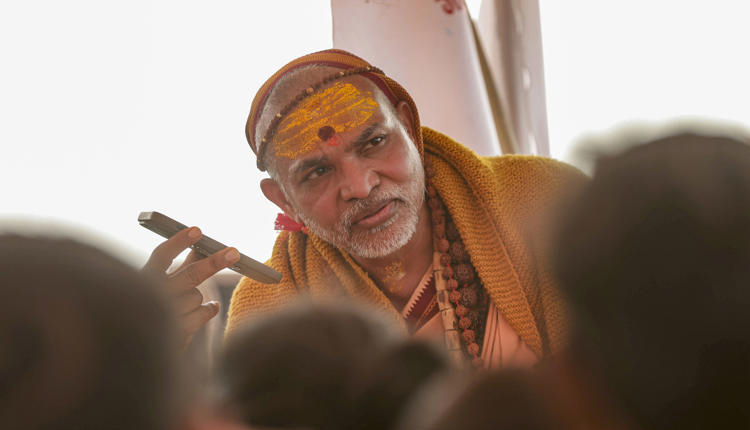
Prayagraj: Tensions escalated at the ongoing Magh Mela in Prayagraj as the Mela Administration issued a show-cause notice to Shankaracharya Swami Avimukteshwaranand Saraswati, questioning his use of the title “Shankaracharya” before his name and his claim to the Jyotish Peeth seat.
The notice, served late Monday night after the seer reportedly refused to accept it personally, demands an explanation within 24 hours, citing a pending Supreme Court civil appeal that bars any consecration or appointment to the Jyotish Peeth until the matter is resolved.
The administration pointed to a display board at the Swami’s camp declaring him as the Shankaracharya of Jyotish Peeth, terming it a disregard for the apex court’s orders. Officials pasted the notice at his camp amid his ongoing dharna (sit-in protest), which stems from earlier grievances, including restrictions on his holy dip during Mauni Amavasya.
In a sharp rebuttal, Swami Avimukteshwaranand Saraswati defended his position, asserting that recognition as Shankaracharya comes solely from the other peeps, not administrative or judicial bodies. He highlighted written and practical support from the Shankaracharyas of Dwaraka and Shringeri Peeths, who have joined him for holy dips in past Magh Melas, and noted the Puri Peeth’s silence as tacit acceptance. “Where in the Supreme Court order does it say ‘Shankaracharya’ cannot be used before the name?” he questioned, adding that even the Central Government refers to him as such in court filings. He challenged the administration’s authority, stating, “Shankaracharyas decide who is a Shankaracharya,” and dared critics to confront him directly.
His advocate, P N Mishra, warned that the notice interferes with ongoing judicial proceedings and could invite contempt charges against officials. The seer has promised a formal reply, while questioning why camps of other Shankaracharyas from Puri were allowed without objection.
The episode highlights the intersection of tradition, legal disputes, and administrative oversight at one of India’s largest religious gatherings, where millions converge for sacred baths at the Sangam.
Comments are closed.