

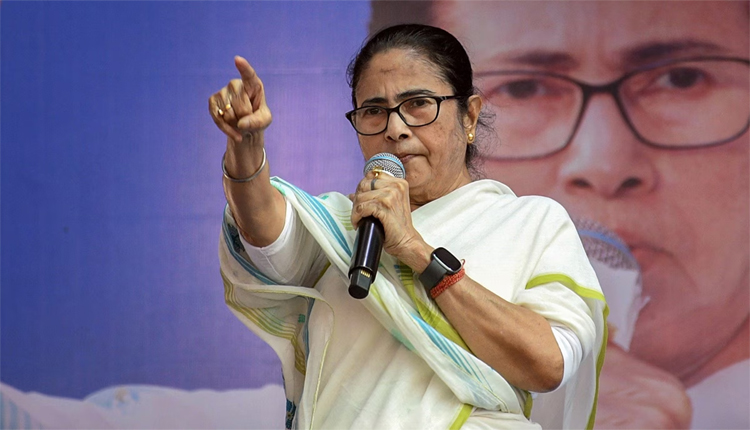
Kolkata: It is often said that what brings a leader to power can sometimes orchestrate their ultimate downfall. For Mamata Banerjee, the fierce anti-land acquisition movements were the massive political breakthrough that helped her topple the Left Front. However, as her political era draws to a close, analysts argue that this very stance created a prolonged industrial drought in Bengal—a reality that makes a decades-old interview of the late former Chief Minister Buddhadeb Bhattacharjee strikingly relevant today.

During an interview in 2001, when a journalist asked Bhattacharjee what he would write about Mamata Banerjee as a person, his response was devastatingly blunt. “I would leave a blank page,” he stated. He elaborated that while he could write 150 words about the Trinamool Congress, he would draw a zero on the individual. “I write about policies and programs. This party has no ideological foundation.”
Bhattacharjee also heavily critiqued Banerjee’s role during the devastating 1999 floods. Instead of standing by the distressed public, he claimed she was merely angry, accusing the state government of causing the disaster while waiting for an excuse to impose the President’s Rule (Article 356) in Bengal.
Furthermore, he outlined the stark difference in their approaches to employment. Dismissing the culture of arbitrary job handouts, Bhattacharjee championed systemic industrialization. Citing the Haldia Petrochemicals project, he noted how it birthed 400 downstream factories and secured 12,000 jobs. “I won’t claim I personally gave them jobs,” he remarked, emphasizing self-sustaining development over political favors.
Today, as Bengal turns a new political page, the Trinamool’s longstanding “industry versus land” dilemma remains unresolved. For the state’s youth, the resulting lack of massive industrial growth has been a massive grievance, validating the late Marxist patriarch’s words as a haunting reality check for Bengal’s political landscape.
Comments are closed.