

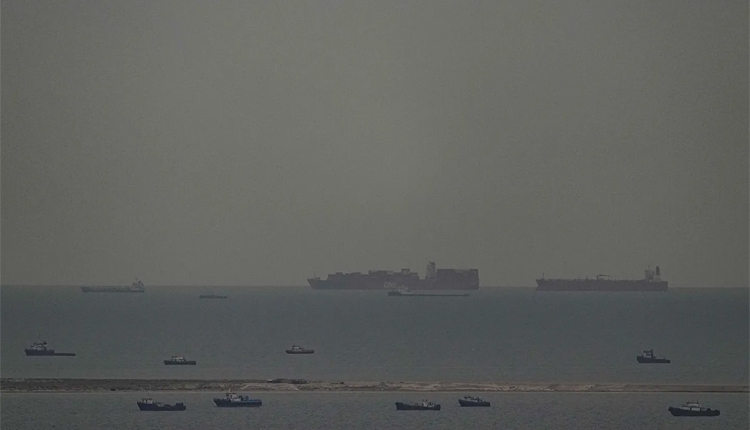
Tehran: Escalating regional tensions, Iran has declared that the Strait of Hormuz will remain closed until the United States significantly alters its behaviour. Setting stringent conditions for reopening the crucial waterway, Tehran warned it would not back down from its demands, even if it meant risking a full scale war.

Broadcasting the official stance on state television, Mohammad Bagher Zolqadr, secretary of the Supreme National Security Council and a Revolutionary Guard commander, outlined a comprehensive list of prerequisites. Iran has demanded that Washington permanently cease military actions against Tehran and its regional armed allies. The stipulations also include a complete withdrawal of American military forces from the region and an absolute end to any future threats.
The aggressive negotiating stance extends to deep economic and maritime conditions. Tehran insists that the US must immediately lift the naval blockade on Iranian ports, remove all existing sanctions, release frozen Iranian assets unconditionally and provide full financial compensation for war damages. Washington has not issued an immediate response to the latest demands. The US had previously maintained that a mutually acceptable management agreement is necessary before the blockade can be lifted. Iran, meanwhile, claims it is nearing a management agreement with neighbouring Oman for the strait.
As the diplomatic stalemate continues, violence in the strategic shipping lane persists. Authorities in the United Arab Emirates reported that a commercial vessel belonging to the Abu Dhabi National Oil Company came under attack while navigating the strait. The UAE Foreign Ministry accused Iran of firing a missile at the ship as part of an ongoing intimidation campaign against commercial vessels.
The oil company confirmed the early Saturday strike but reported no casualties. According to the firm, its fleet has faced over a dozen drone and missile attacks since hostilities involving the US and Israel escalated against Iran in February. These previous strikes have resulted in one fatality and injured twenty crew members.
In a related development, the United Kingdom Maritime Trade Operations centre reported a missile strike on a ship east of the Omani city of Khasab. The attack triggered a fire on board, which was successfully extinguished without harming the crew. It remains unclear if this was the same incident involving the Abu Dhabi vessel, but it highlights the severe risks currently plaguing one of the most vital oil transit choke points in the world.
Comments are closed.