

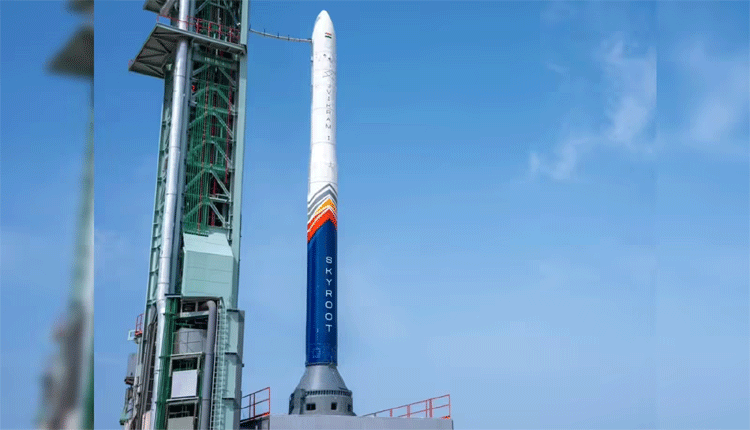
Sriharikota: On July 18 2026, private space company Skyroot Aerospace successfully launched its Vikram 1 orbital rocket from the Satish Dhawan Space Centre in Sriharikota. Codenamed Mission Aagman, this historic launch marks a major milestone for the burgeoning private space sector in India, proving the nation’s growing prowess in independent aerospace technology.

Founded in 2018 by former ISRO engineers Pawan Kumar Chandana and Naga Bharath Daka, Skyroot rapidly expanded after the government opened the space sector to private players in 2020 through the creation of the Indian National Space Promotion and Authorization Centre. Following the successful suborbital flight of Vikram S in 2022, the company has now formally entered the exclusive orbital club. The rocket itself is a fitting tribute to Vikram Sarabhai, the founding father of the Indian space programme.
Unlike traditional ISRO mission control rooms often filled with veteran scientists, the Skyroot launch was steered by a vibrant team with an average age of just 28 years. Comprising graduates from elite institutions like IITs and NITs working under the direct guidance of former ISRO experts, this young crew successfully managed the highly complex launch dynamics. Vikram 1 is a four stage orbital launch vehicle. The first three stages utilise solid fuel, while the final stage features a liquid engine that can be restarted to place payloads into precise orbits. During this mission, the rocket successfully deployed several small satellites into a 450 kilometre low earth orbit. It currently boasts a payload capacity of approximately 500 kilograms.
Mission Aagman is the first of three planned developmental flights before the vehicle is ready for fully commercial operations. This achievement proves that private Indian startups can offer cost effective satellite launch services compared to traditional government agencies. It also directly addresses the soaring global demand for deploying small satellites, paving the way for massive job creation and allied startups in the domestic aerospace industry.
This successful mission goes beyond simply placing a rocket in space. It symbolises the true potential of a self reliant India, reducing dependence on foreign launch providers while heavily boosting technology exports. As these private aerospace firms continue to overcome future challenges like developing reusable technology, the success of this young team provides a remarkably strong foundation for India to emerge as a dominant global space power in the coming decades.
Comments are closed.