

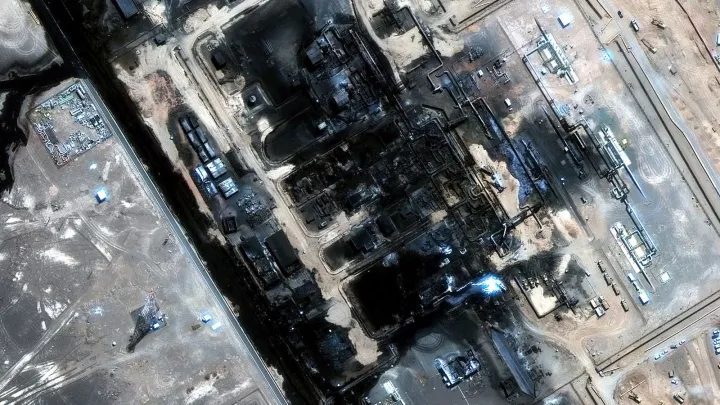
Riyadh: Recent satellite imagery has laid bare the extensive devastation inflicted on Saudi Arabia’s critical East-West oil pipeline following a major drone strike. The visual evidence, captured by the Sentinel-3 satellite between September 9 and 12, confirms large-scale damage to the strategic energy corridor, underscoring the growing security threats to Middle Eastern petroleum infrastructure.

According to independent analyses of the satellite feeds, massive plumes of black smoke were visible trailing from the facility, painting a grim picture of the aftermath. Corroborating the visual data, NASA’s environmental monitoring instruments recorded unusual thermal activity and intense heat signatures along the pipeline’s route, clearly indicating active fires and charred infrastructure following the aerial bombardment.
“The before-and-after satellite images reveal severe structural damage and scorching around the primary pumping stations,” security and intelligence analysts noted, emphasising the precision and scale of the strike. While Saudi authorities have strongly condemned the assault, comprehensive details regarding the exact operational impact and repair timelines are still being assessed by the state petroleum corporation.
Preliminary intelligence reports suggest that the hostile aircraft may have originated from neighbouring territories, with mounting suspicions pointing towards militia factions operating in Iraq or Houthi forces in Yemen. This latest escalation has significantly heightened regional geopolitical tensions, drawing sharp reactions and concerns from the international community.
The 1,200-kilometre East-West pipeline, also known as the Petroline, is a crucial artery for the global energy market. Designed to transport millions of barrels of crude oil daily from the Kingdom’s eastern oil fields to the Red Sea port of Yanbu, it strategically bypasses the volatile Strait of Hormuz. Any prolonged disruption to this network threatens to send ripples through international oil markets and inflate global crude prices.
As emergency response teams work to contain the damage and restore full operational capacity, Riyadh has reportedly bolstered its air defence systems around key energy installations. The incident serves as a stark reminder of the vulnerability of global energy supply chains to increasingly sophisticated drone warfare.
Comments are closed.