

New Delhi: The Strait of Hormuz, once just a narrow waterway, has become a dangerous zone for American forces. This has led President Donald Trump to quietly adjust his aggressive approach in the ongoing conflict with Iran.
What was anticipated to be a quick win after targeting Iran’s top leaders has turned into a costly problem. The US has spent nearly $35 billion (around ₹3.22 lakh crore) in the first month, but reopening the important oil route is still difficult. Iran’s strong navy and repeated attacks on US assets in the Gulf have made any large operation risky and expensive.
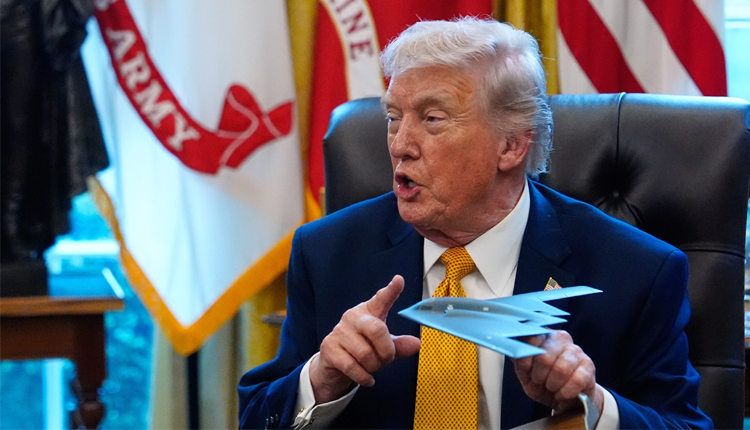
Trump, who once spoke strongly about securing the strait, has now stepped back from direct confrontation. In his latest comments, he told allies such as Britain, France, and Germany, who are facing jet fuel shortages, to either “buy oil from America” or “show some courage” and manage the strait themselves. He pointed out that the US did the hard part by striking Iranian targets, while others stayed out of the fight.
Defense Secretary Pete Hegseth added that Iran knows what’s coming in the coming days. Hegseth said Iran understands the next few days are crucial. Trump is willing to make a deal if Tehran “acts wisely,” but he also warned of stronger attacks if it does not. The US wants to avoid a long war, ground fighting, or heavy losses to protect its soldiers, especially since only about 1 per cent of America’s oil comes through Hormuz.
Meanwhile, Iranian strikes have damaged expensive US radars and aircraft in Jordan, the UAE, Saudi Arabia, and Qatar. For global oil markets and everyday fuel prices, this change means uncertainty remains. Trump’s new approach combines strong words with careful caution, showing that even today, some chokepoints are too risky to handle without serious consequences.